---
title: "Design for the Loops ,Not the Line: Rebuilding Revenue Cycle After a Leadership Vacuum"
description: Shawn Gretz and Sharlene Seidman discuss leadership, succession planning, breaking silos, and what makes revenue cycle organizations world-class today.
image: https://insights.getixhealth.com/hubfs/THUMBNAIL_SHARLENE_YOUTUBE.png
---
[Skip to main content](https://insights.getixhealth.com/podcast/design-for-the-loops-not-the-line#main-content)
[](https://insights.getixhealth.com/)
- [Solutions](https://getixhealth.com/solutions.html)
- [Patient Access](https://getixhealth.com/solutions/patient-access.html)
- [Eligibility & Enrollment](https://getixhealth.com/solutions/eligibility.html)
- [Workers’ Compensation](https://getixhealth.com/solutions/workers-compensation.html)
- [Insurance Resolution](https://getixhealth.com/solutions/insurance-resolution.html)
- [Medical Coding](https://getixhealth.com/solutions/chart-coding-audits.html)
- [Early Out Self Pay](https://getixhealth.com/solutions/self-pay-patient-billing.html)
- [Professional RCM Services](https://getixhealth.com/solutions/professional-rcm-services.html)
- [Insights](https://insights.getixhealth.com)
- [Company News](https://insights.getixhealth.com/company-news)
- [Blog](https://insights.getixhealth.com/blog)
- [Podcast](https://insights.getixhealth.com/podcast)
- About
- [Our Company](https://getixhealth.com/about.html)
- [Our Technology](https://getixhealth.com/technology.html)
[Let’s Talk](https://insights.getixhealth.com/podcast/design-for-the-loops-not-the-line#gh_form_id)
https://youtu.be/GiunhiIznWY
GetixHealth Podcast
# Design for the Loops ,Not the Line: Rebuilding Revenue Cycle After a Leadership Vacuum
 Alex Oey · July 30, 2026
Design for the Loops ,Not the Line: Rebuilding Revenue Cycle After a Leadership Vacuum</span>" allow="accelerometer; autoplay; clipboard-write; encrypted-media; gyroscope; picture-in-picture" allowfullscreen loading="lazy">
[Watch on YouTube](https://youtu.be/GiunhiIznWY) [Listen on Spotify](https://open.spotify.com/episode/5UIMvoAMaTsIB6O02dzfIg?si=XlvfJJjJRDyoOxS-Tm4SMw) [Listen on Apple Podcasts](https://podcasts.apple.com/us/podcast/design-for-the-loops-not-the-line-rebuilding/id1773360167?i=1000779113865)
Transcript — follow along with the video
- **Shawn Gretz** (0:09) Welcome to RCM ReFrame, the GetixHealth podcast where we talk to revenue cycle leaders across the country. (0:17) Today, my guest is Sharlene Seidman, the VP or Senior Vice President of Revenue Cycle from Johns Hopkins University. (0:24) I'm excited for today because our topic is going to be around leadership.
- (0:28) So Sharlene, welcome to the podcast.
- **Sharlene Seidman** (0:30) Thank you. (0:32) I'm very excited to be here.
- **Shawn Gretz**(0:34) So first question I always ask is how did you get on your journey in revenue cycle? (0:38) What brought you to the position you are today?
- **Sharlene Seidman**(0:41) My journey started right after college. (0:46) I was a health systems management major and I think that was sort of a generic term. (0:53) I knew I didn't want to be a clinical person, but I love the whole healthcare field and I wanted to do business and computers were just starting and I'm that old.(1:05) And so I started my career in at a institution called the University of Connecticut Health Center, where I was doing some work to install a new practice management system. (1:20) And it was focused on revenue cycle functions. (1:23) So I was embedded within a revenue cycle team.(1:27) And that's where I really started to learn a little bit of the core functionality of what we do to support our physicians, our hospitals. (1:35) And I did that work for about five years and then had an opportunity that presented itself at Yale. (1:43) It was the Yale School of Medicine in the faculty practice there.(1:48) They were rebuilding a business office. (1:50) And so I was able to join the organization as they were building from scratch. (1:58) So it was really fun, new systems, new processes, learning all new people.2:03) And so I spent the bulk of my career doing healthcare IT and then moved into operations after many similar organizations took the Epic journey. (2:16) So we installed Epic together with our hospitals and the physicians. (2:21) And at the end of that implementation, a lot of the people sprinkle back into different roles or leave the organization.(2:30) And I was approached to lead our hospital's revenue cycle work and be part of a succession plan for someone who had been there and spent his entire career, done a great job building a team. (2:44) And when I moved into that role is when I really started to love leadership. (2:51) I knew the technical side of things.(2:53) I knew the workflow. (2:55) But when I got to meet all of the wonderful people that I had the fortunate experience of leading, I really started to just enjoy what I was doing.
- **Shawn Gretz**(3:08) Oh, that's fantastic. (3:08) You know, now today, right? (3:11) You went from Yale and now you're at Johns Hopkins, 20 plus years, almost 30 plus years of working for one organization.(3:18) How did you get to the point of saying, you know, it's time for a new chapter for me?
- **Sharlene Seidman**(3:24) Yeah, that was a very tough decision. (3:27) So I spent 28 years working for the Elmhaven Enterprise and roughly six or seven months ago, I picked up a call from a recruiter and met the wonderful, wonderful leadership at Johns Hopkins, spent several interviews with meeting more people. (3:52) And one thing that really resonated with me is the excitement and how proud everyone is to work for Hopkins.
(4:01) And I thought, if so many people are telling me the same thing over and over again, I really want to be part of this because I want to see what's so enticing and rewarding for people. (4:15) So I did decide to take the leap. (4:18) I have two grown children, they're in their mid to low 20s.(4:25) And they also helped to encourage me to to make a change because it's unheard of for people of that generation to stay in an organization for 28 years. (4:36) So they and my family encouraged me and I'm thrilled to be here.
- **Shawn Gretz**(4:42) You know, it's interesting, right? (4:43) So what you're what you're really saying is this in two times in your life, right? (4:46) You were a SME running the IT side or helping with the IT side and you had to make a change, right?(4:52) You had to make a change in your leadership to lead people, which is a it's a very big leap for anybody to make. (5:00) And then again, now coming to a new organization, you're like, OK, I want to try something new and challenging for anybody else that's listening to this podcast. (5:09) How do you how do you get to your point to say, you know, it's time for me to make that leap?(5:12) How did you how did that come to you saying, hey, look, I need to make this next step in my career?
- **Sharlene Seidman**(5:19) Yes. (5:20) Yes. (5:20) Moving to Hopkins specifically.
- **Shawn Gretz**(5:23) Specifically Hopkins. (5:24) Yeah.
- **Sharlene Seidman**(5:25) Yeah. (5:25) I decided that, first of all, the organization was incredible, but it's very difficult to leave somewhere where you felt like it was your family. (5:40) And every day you go to work and you you know what you're doing and you know how to get things done in an organization.(5:51) And I was kind of asking myself, do you think you could do that somewhere else? (5:57) Is that possible? (5:59) And so I took a little bit of a risk and moved out of a comfortable place where I was very confident with everything that I was doing.(6:08) And I know that I understand revenue cycle extremely well, but I also know that I understand people very well. (6:16) And so I thought this can translate to a new organization.
- **Shawn Gretz**(6:22) You know, during our prep call, you had a quote, and I think it's a good segue for the conversation that we had. (6:27) You said leadership isn't really about A.R. days or cash collections, it's about putting people in position where they can succeed. (6:36) So now at John Hopkins, a new place, a new place to put people in the right positions.(6:41) How are you thinking about that?
- **Sharlene Seidman**(6:43) Yes. (6:44) I've already started to think about it. (6:46) I've already formed a vision for our new revenue cycle.(6:51) And one of the things I've been talking to the team about is we are good. (6:57) We do things really, really well here, but we are going to take it to the next level and we're going to become world class in revenue cycle. (7:07) And those are the kinds of things that are exciting to people to hear.(7:12) And they're getting excited about what are we building together? (7:16) This is terrific. (7:17) They also were in a environment where they didn't have a leader for a year, year and a half.(7:26) And that's tough for teams because they want to know that there's someone who has the vision, who's going to bring them along to a future. (7:35) And so I think the stability of having me here is good for people.
- **Shawn Gretz**(7:43) I love the idea to create your vision first, right? (7:47) So whatever that vision is for the organization. (7:49) And to be world class is something impressive, especially for an academic medical center like John Hopkins.(7:55) How did you get buy-in for that vision? (7:58) Was it easy for the individuals to buy into that, to be world class?
- **Sharlene Seidman**(8:02) I think everyone wants to be the best. (8:08) Most everyone comes to work every day and feels like, okay, I'm making a difference. (8:14) Johns Hopkins is world class on our clinical research areas on revenue cycle.(8:20) That's what we're striving to be. (8:22) So when I set the vision, I think people were trying to understand it first. (8:29) And it took a lot of conversations.(8:31) I created a lot of visuals of what exactly I mean for our new structure, what it's going to look like. (8:40) What it did mean were some changes in positions and how we were thinking about what revenue functions depend on each other and should be grouped together under a single leader. (8:56) And so once I started to show visualizations of it and talk about what each group was going to be responsible for and how we were going to break down those silos between groups, then people started getting excited about it.(9:12) And I was getting calls from people who had not yet met personally one-on-one, but saying, I love what you're doing. (9:21) I really understand this. (9:22) I think this is a great idea.(9:24) And so I think that we're all picturing it now together.
- **Shawn Gretz**(9:31) You know, the message spread, it sounds like, right? (9:33) Not only the visualization, but the conversations and then the feedback loop that came through and helped educate you as well, saying, is this vision working? (9:41) And is it taking hold in this organization?(9:44) That sounds fantastic. (9:46) As you look at it, right? (9:47) There's times, especially a new leader, you come into an organization and you have to ask yourself, do I have the right people in the right seat for decision-making overall for the right to be the world-class leader in healthcare revenue cycle?(10:01) How does that, how do you think about that overall? (10:04) And how do you continue to think about that? (10:06) Not only because it sounds like you had succession planning at your previous organization when you went into that role as well.(10:12) So what is your thought process on that?
- **Sharlene Seidman**(10:13) Yeah, I think that is a critical job of a leader to look at the individuals who are leading and is their skillset matching what they're responsible for? (10:29) Are they growing? (10:32) Are they developing?(10:34) Are they in that right seat? (10:36) And sometimes people are not. (10:38) And I think really good leaders can identify a person's skillset and match it with the requirements of that team.(10:48) And one thing that I would say is that having those conversations takes some courage. (10:56) It's easy when someone is in the right seat. (10:59) They're doing an amazing job and you can see that they're just shining.(11:05) But sometimes when that doesn't happen, it's hard to have those conversations and think, okay, how am I going to get to a different place with the team? (11:14) And so that's what we've been spending our time getting reorganized. (11:19) And if someone has decided to depart the organization, how are we going to find new talent to replace that person and then form that team that's the right team?
- **Shawn Gretz**(11:34) Yeah, it's interesting. (11:35) I've seen several organizations recently do this and really take a look at externally for talent as well. (11:42) Novant and Heather Dunn, she shared this on LinkedIn, the entire process of how she went through and selected her A team in a sense.(11:51) Charlene, do you think from a perspective, when you look at it, right, is it harder, do you think, to coach someone into success or harder to move on from someone and coach someone out of a role that they're probably not the right seat in?
- **Sharlene Seidman**(12:05) Oh, I think that entirely depends on the individual. (12:09) I think both can be done. (12:12) The other thing I've seen is something that's really interesting.
(12:18) Someone who wasn't succeeding in their role, but you give them a new leader and they really explode and develop. (12:30) So it's not always on either the leader or the person who's trying to grow, but sometimes it's a combination of the two. (12:41) I love the story of when someone moves to someone else and then all of a sudden, wow, they're really outperforming.
- **Shawn Gretz**(12:51) Well, that's fantastic because there are times, right, and there's actually, when you think about it, there's times where individuals will grow as well, moving from one department to another department to learn another part of the rep cycle that they probably didn't have before. (13:04) And it sounds like that was your journey as well. (13:07) I assume you share that with individuals as well.
(13:10) It's like this is a great way to grow not only you, but also your career and also your future as well.
- **Sharlene Seidman**(13:16) Yes, yes. (13:18) Yeah, I've done a lot of work. (13:21) When I was at my previous organization, I helped to lead our women's and men's lean in program to support emerging leaders.(13:32) And it started with reading the Sheryl Sandberg book. (13:36) And there are so many leadership skills that are taught in that book. (13:44) And what you just described is a jungle gym.(13:46) So a lot of people think I need to climb the ladder, and there's a step everywhere along my career journey. (13:54) Well, in many cases, we have to take a step to the right or to the left and then take to get to the next level. (14:02) And gathering all of that different skill set, knowledge is really helpful for all of us.
- **Shawn Gretz**(14:10) Yeah, it grows you, it grows your team, it grows a lot of individuals across the organization. (14:14) The best way is to take that jungle gym, move sideways, move. (14:18) Sometimes even moving down is not a bad.(14:20) If you're finding the right leader to help you grow as an individual, the selection to move down is not a bad choice sometimes too. (14:28) Yes. (14:29) Yeah.(14:29) So when you look at your new organizations and you say to yourself, how do you look for new identified leaders or people that potentially could be that future succession for John Hopkins?
- **Sharlene Seidman**(14:42) There are a couple of things. (14:46) First, at the level that I've been recruiting, they need to have a solid understanding of RevCycle and the functions that each is going to lead. (14:57) So if they have that experience at one or two organizations or spend time learning from other RevCycle leaders throughout the country, that's definitely the base layer.(15:13) But then when I look at their skillset of leading, because once you get to a certain point, it's helpful to understand the technical aspects of the job, but you become pretty removed from day to day. (15:26) So then it's all about making sure that you can explain the vision or understand from a national level what's happening with regulatory requirements or where the industry is going. (15:41) Who are the right partners that we need?(15:45) Because in RevCycle, all of our organizations depend on outside companies, whether or not they're technology partners or service partners. (15:54) So I think that those leaders have to have really strong interpersonal skills because they need to match up with what they're responsible for.
- **Shawn Gretz**(16:06) It's interesting, right? (16:07) What you're really talking about is shifting from technical capabilities of RevCycle to the visionary capabilities, getting where the puck is going, as Wayne Gretzky would say, the capability to understand what do I need 10 years from now or what do I need five years from now? (16:22) Do I have the right partners in place?(16:24) Managing partnerships as well. (16:26) That's a difficult skillset all on its own. (16:30) And how do you think about that overall from someone that's coming into an organization like Johns Hopkins?(16:36) How do you think about the vendor management side of it and what is the skillset they need for that as well?
- **Sharlene Seidman**(16:42) Well, the vendor management side of it is very complicated because our industry has exploded and there are a lot of competing vendors out there. (16:54) So to partner with the right people, you first have to vet them really well to make sure that what they're pitching to you is really proven and it's going to work for your organization. (17:11) And the other thing that's really nice to find is that they share your same values.(17:15) So I like to make sure that we partner with vendors that match our core value.
- **Shawn Gretz**(17:24) Yeah, and I probably myself probably should have said that a different way. (17:27) I probably should have said a partner in the organization because that's really what you're looking for is a partner. (17:32) Someone that works with you, shares values, really thinks about it from Johns Hopkins perspective versus their own perspective as well.(17:40) And then shares feedback as well. (17:43) All right, we talked about a little bit about this, but let's talk a little bit more. (17:46) 10 years from now, if you had a crystal ball and you said to yourself, what is a leadership trait that's going to be different from what it was today 10 years from now(17:56) What's going to be new, different that you're going to need?
- **Sharlene Seidman**(18:00) Well, everyone loves to talk about AI and technology. (18:06) The other thing that we're facing is decreasing reimbursement and at a sort of high level of the entire payer system, what's happening with those transactions. (18:23) The cost is also not sustainable.(18:26) So I think that future leaders really are going to have to understand not just the AI piece of it, but how it's going to be useful to drive down the cost. (18:39) Because in order for us to survive, we are going to have to figure out ways to reduce the cost and the administrative burdens that we're working with between payers and providers. (18:54) It's not something that's sustainable.(18:58) So I think a future leader is going to have to be a good problem solver, but also be super creative and innovative to see what it can become.
- **Shawn Gretz**(19:10) It's interesting, right, when you really think about this. (19:12) And I just actually recently had this conversation with one of your previous colleagues, Jonathan, where AI race is going today. (19:22) Even the insurance individuals are using AI faster and faster and faster, causing us to be able to have to have conversations about how do we use AI to where we can compete as well, especially as you talk about the cost, but also the number of claims that are being denied and or prior prior authorizations as well.(19:44) Do you think as an organization that AI is anybody in the organization is 10xing themselves with AI today?
- **Sharlene Seidman**(19:52) I do. (19:53) There are so many great examples of how we can use it to make us more efficient and smarter, I guess.
- **Shawn Gretz**(20:06) That's a part where when we really think about it, right, 10 years, as you said, as I asked the original question was, how do you 10 years from now, what are you going to need in a leadership trait and the capabilities? (20:17) It is it is probably more so the capability if you really boil it down is the capability to actually use the technology and help you improve you as a person, but also your organization as well.
- **Sharlene Seidman**(20:30) Oh, yeah, that's going to be table stakes. (20:32) There's no doubt that everyone who's in a revenue cycle leadership role in 10 years is going to have to understand the technology really well and and how it can benefit all of us.
- **Shawn Gretz**(20:46) Let's talk a little bit more about succession planning, because I think it's a part that I think is becoming more and more important in organizations and making sure you have the next leaders as well. (20:59) How does how do you what's your personal opinion? (21:02) I'll say I'll ask that question of how do you make sure you have that succession planning done well and right for you in the rev cycle?
- **Sharlene Seidman**(21:10) It's definitely part of our leadership responsibilities. (21:15) So most people are in an organization that has either every six months, every year, annual performance reviews. (21:25) As part of that entire process, we should be identifying talent and talking with people to see what they're interested in doing.(21:35) Some people don't want to grow. (21:37) Some people don't want to develop and they're very happy. (21:40) And when someone says that to me, I'm great with that.(21:43) I say, OK, perfect there. (21:45) You're in a position, you're happy, but there are a lot of people who want to grow. (21:51) And sometimes.(21:54) Our leaders and managers don't know that and it's too late because that person finds a job somewhere else and then we've lost a really great, talented person. (22:03) So I think as part of our succession planning, we have to continuously be looking at who's on our team, who wants to grow and then helping them to figure out how to do so. (22:15) Create development plans, give them some stretch opportunities, give them exposure to other leaders throughout the organization and give them opportunities to try it out.
- **Shawn Gretz**(22:29) I love the idea of stretch assignments. (22:31) It's something that back at AmeriCollect we did all the time. (22:34) They have conversations about what stretch assignment would you like to try or an individual development plan.(22:40) Can you give me an example of a stretch assignment that worked really well for you in the past?
- **Sharlene Seidman**(22:45) Yeah, so in the past, we've done things like we were working on our patient financial experience journey. (22:55) And for a lot of us, the awareness that we needed to focus on the patient's financial experience, not just their clinical experience and the care that they received from our nursing and physician technicians, but really how the financial part of their journey impacts. (23:18) Are they prepared?(23:19) Are they comfortable? (23:21) If they're comfortable, they'll recover better because they don't have to worry about the financial side of things. (23:27) So that really started in about 10 years ago, 10 or 11 years ago.(23:32) And we didn't really know what it was. (23:34) So we were trying to figure out what does the patient financial experience mean? (23:38) How do we make it better?(23:40) And so we gave some stretch assignments to people that it wasn't their primary job, but they had other roles in the organization, put them together on something to figure it out. (23:51) And then you need to go out and talk to other leaders, find out from other people, bring some ideas back. (23:58) And so that's an example of one.
- **Shawn Gretz**(24:01) That's a fantastic one. (24:03) The use of committees, the ability to say what is what are we trying to solve for and then bring groups of people together and send them off to solve for it. (24:12) It's the capability.(24:14) Not only are they learning from a perspective, but then the afterwards is probably the most impactful is them giving back because then they are the ones that are educating what they learned for patient financial journey. (24:27) That's that's a really great recommendation.
- **Sharlene Seidman**(24:31) Yes, true.
- **Shawn Gretz**(24:32) Well, good.
- **Sharlene Seidman**(24:34) I'm sorry. (24:36) Yeah, no, I was just saying I sometimes it's it's also work that you have to do with employees who might want to grow. (24:46) But then you have to do work with your management team to let those people expand their wings because sometimes people feel uncomfortable.(24:55) Oh, no, this is one of my superstars. (24:58) Then they're just going to leave. (25:00) But I think that part of our responsibility is to let them grow so that the superstars will stay within our organization, maybe lead somewhere else.(25:10) But at least they're still with us.
- **Shawn Gretz**(25:13) The idea that individuals will leave if you give them more opportunities, in my mind, is one of those where I think is backwards, right? (25:20) For us, all of us as leaders, we have to look at and say, if I give them a little bit more, if I keep on adding to their and, you know, really, you're putting you're putting water in their cup, you're giving them a little bit extra. (25:32) And that little bit extra increases their knowledge(25:35) And they will perform better as an organization as well, because people want to be given more. (25:42) And they, you know, there's a they want to be given agency. (25:45) And I think that's the part of it that a lot of people might one of my favorite words is to give them agency, the ability to make their own decisions and try something new, different, better, because that's where we all learn the best leadership skill set is when you're given more time to be able to do more things as well.(26:01) So one, any last words? (26:04) Go ahead.
- **Sharlene Seidman**(26:05) Yeah, I'll just add to this. (26:07) I think that Johns Hopkins does this extremely well. (26:11) I've been here for five and a half months now.(26:13) And one of the things I love about this organization and this revenue cycle team is that there has been quite a bit of movement. (26:20) And I see people excited about new opportunities. (26:25) And people will apply to a lot of different jobs.(26:30) And so I think that I'm in a right place to watch all of this and enable this to happen.
- **Shawn Gretz**(26:36) That's exciting. (26:37) Any last words on leadership or anything that our listeners should take from you, from your advice and how to lead multi academic medical centers?
- **Sharlene Seidman**(26:47) I think that there's just one more thing that's really important. (26:51) And I talk to my team about this often and breaking down silos. (26:58) So if you grow leaders to be responsible for their area, but not to cross lanes with each other, I think it's a big mistake.(27:08) So this concept of breaking down the silos is important because in rev cycle, you might think it's a series of handoffs, but a lot of times you're circling back and there's so many integration points that the silos are barriers. (27:26) And so the more and more we can work together and trust each other and depend on each other, you just become such a more powerful organization.
- **Shawn Gretz**(27:36) That's a fantastic one. (27:37) And I think more people need to take advice of that as well to make sure. (27:41) And it's one area where you really think about it.(27:44) At AmeriFleck, one of the things that we did is we gave every leader 30 minutes to meet with another leader every month throughout the organization, because I want that relationship developed today before a problem happens, because there's always collisions that occur in any organization where we have to solve for something. (28:02) And if you have a relationship, you're more likely to solve for it today based upon that. (28:08) Do you have another example of like, did you allow your leaders to meet with each other regularly?(28:13) And that doesn't have to be on business.
- **Sharlene Seidman**(28:16) Yeah, well, my leaders are now meeting with each other. (28:21) They meet with each other without me. (28:23) But my direct report groups meet once a week.(28:29) And we talk about a whole bunch of different things. (28:31) And then we do lots of ad hoc things. (28:33) If there's something specific we need to come together to talk about off of our regular meeting cadence.(28:39) And then I don't have a formal program where you go outside of our group to meet people. (28:48) But we can't really do any of our work without getting to know some of our customers. (28:56) And I like to say that Revenue Cycle has hundreds of bosses, because everyone wants to know that we're collecting every dollar and making sure that we're doing things to maximize reimbursement.(29:10) And so lots of people, we're sharing our KPIs and what our opportunities are.
- **Shawn Gretz**(29:20) It's spread throughout the organization. (29:22) Well, Charlene, I truly appreciate your time today. (29:26) The conversations about how not only the ability to lead over metrics and the capabilities of how to create succession plans as an organization.
Executive summary
In this informative episode of RCM Reframed, host Shawn Gretz, President, Sales and Marketing for GetixHealth, and John Hopkins Medicine Vice President of Revenue Cycle, Sharlene Seidman discuss a variety of topics from leaving a 28-year career for a new position to what separates good revenue cycle organizations from world-class organizations. They also talk about leader-employee pairing, succession planning, silo-breaking and more.
## Key takeaways
- Why the right-seat/wrong-leader diagnostic matters more than replacing underperformers
- How to use stretch assignments (like patient financial experience) as leadership development laboratories
- Why internal mobility is a retention strategy, not a flight risk
- Why rev cycle silos are especially damaging when the work is full of loops, not linear handoffs
## More on this topic
[Podcast Episode Charting the Future: Insights from Chief Information Officers in Healthcare](https://insights.getixhealth.com/podcast/insights-from-cio) [Podcast Episode Beyond Bots: What Rev Cycle Leaders Need to Rethink About AI](https://insights.getixhealth.com/podcast/beyond-bots) [Podcast Episode The RCM to CEO Path](https://insights.getixhealth.com/podcast/the-rcm-to-ceo-path) [Podcast Episode When Financial Counseling Becomes Case Management](https://insights.getixhealth.com/podcast/when-financial-counseling-becomes-case-management) [Podcast Episode Building Payer Relationships, Aligning Teams, and Preparing for Cybersecurity Threats](https://insights.getixhealth.com/podcast/building-payer-relationships) [Podcast Episode Turning Coding Needs into Coding Success with AI](https://insights.getixhealth.com/podcast/turning-coding-needs-into-coding-success-with-ai)
### Meet The Speakers
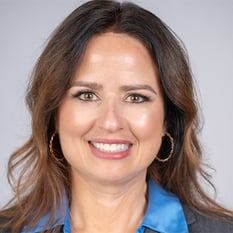
#### Sharlene Seidman
Vice President, Revenue Cycle Management
Sharlene Seidman is vice president, revenue cycle management at Johns Hopkins Medicine (JHM). She joined JHM in February 2026.In this role, Seidman provides leadership for all activities related to the revenue cycle operations management of the Johns Hopkins Health System and the Johns Hopkins University School of Medicine. This includes managing the overall strategy, alignment, execution and delivery of revenue cycle services. A team-focused senior leader, Seidman has 30 years of experience in academic medicine. She is an accomplished health care finance executive with extensive experience in revenue cycle strategy and operations in large academic health systems. Seidman leads with a collaborative, data-driven approach, aligning cross-functional teams, sustaining performance and navigating periods of transformation.Prior to her current role, Seidman served as senior vice president for revenue cycle at the Yale New Haven Health System. She also worked at the University of Connecticut Health Center and Yale University School of Medicine. Seidman earned a Master of Business Administration and a Bachelor of Science in health systems management from the University of Connecticut. She also completed certification from the Yale University Executive Leadership Program and The Academy Fellows Program for Finance Executives. She serves in a variety of leadership positions in national and local organizations, including The Health Management Academy, the Healthcare Financial Management Association and several revenue cycle service and technology industry partner advisory boards.
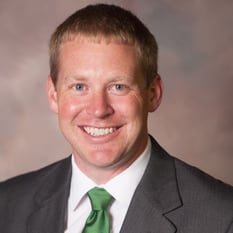
#### Shawn Gretz
President of Sales and Marketing

#### Let's talk!
Connect with a revenue cycle expert to discover a custom plan to amplify your revenue cycle with our transformative technology and services.
[](https://insights.getixhealth.com/)
14141 Southwest Freeway Suite 300 Sugar Land, TX
United States, 77478
- [Solution](https://getixhealth.com/solutions.html)
- [Patient Access](https://getixhealth.com/solutions/patient-access.html)
- [Insurance Resolution](https://getixhealth.com/solutions/insurance-resolution.html)
- [Chart & Coding Audits](https://getixhealth.com/solutions/chart-coding-audits.html)
- [Eligibility & Enrollment](https://getixhealth.com/solutions/eligibility.html)
- [Self Pay Patient Billing](https://getixhealth.com/solutions/self-pay-patient-billing.html)
- [Workers’ Compensation](https://getixhealth.com/solutions/workers-compensation.html)
- [Professional RCM Services](https://getixhealth.com/solutions/professional-rcm-services.html)
- [Solutions](https://getixhealth.com/solutions.html)
- [Technology](https://getixhealth.com/technology.html)
- [Careers](https://getixhealth.com/careers.html)
- [Contact](https://getixhealth.com/contact.html)
- Learn
- [Blog](https://insights.getixhealth.com/blog)
- [Podcast](https://insights.getixhealth.com/podcast)
### The core behind care.
© 2026 GetixHealth. All Rights Reserved |[Privacy Policy](https://www.getixhealth.com/policy/Security_Privacy_Policy.pdf)
```json
{
"@context" : "https://schema.org",
"@type" : "BlogPosting",
"author" : {
"@type" : "Person",
"name" : "Alex Oey",
"url" : "https://insights.getixhealth.com/podcast/author/alex-oey"
},
"dateModified" : "2026-08-17T13:39:31.477Z",
"datePublished" : "2026-07-30T05:00:00.000Z",
"headline" : "Design for the Loops ,Not the Line: Rebuilding Revenue Cycle After a Leadership Vacuum",
"image" : [ "https://insights.getixhealth.com/hubfs/THUMBNAIL_SHARLENE_YOUTUBE.png" ],
"mainEntityOfPage" : {
"@id" : "https://insights.getixhealth.com/podcast/design-for-the-loops-not-the-line",
"@type" : "WebPage"
},
"publisher" : {
"@type" : "Organization",
"logo" : {
"@type" : "ImageObject",
"url" : "https://insights.getixhealth.com/hubfs/1.%20Official%20GetixHealth%20Logo%20_%20Full%20Color.png"
},
"name" : "GetixHealth"
}
}
```
```json
{
"@context" : "https://schema.org",
"@type" : "PodcastEpisode",
"associatedMedia" : {
"@type" : "VideoObject",
"embedUrl" : "https://www.youtube.com/embed/GiunhiIznWY",
"name" : "Design for the Loops ,Not the Line: Rebuilding Revenue Cycle After a Leadership Vacuum"
},
"datePublished" : "2026-07-30T05:00:00Z",
"description" : "Shawn Gretz and Sharlene Seidman discuss leadership, succession planning, breaking silos, and what makes revenue cycle organizations world-class today.",
"image" : "https://blog.getixhealth.com/hubfs/THUMBNAIL_SHARLENE_YOUTUBE.png",
"name" : "Design for the Loops ,Not the Line: Rebuilding Revenue Cycle After a Leadership Vacuum",
"partOfSeries" : {
"@type" : "PodcastSeries",
"name" : "GetixHealth Podcast",
"url" : "https://insights.getixhealth.com/podcast"
},
"publisher" : {
"@type" : "Organization",
"name" : "GetixHealth"
},
"url" : "https://insights.getixhealth.com/podcast/design-for-the-loops-not-the-line"
}
```