---
title: "Leading Through Change : Insights from VP of Revenue Cycle at UC San Diego Health"
description: Mike Vigo’s first two years as Vice President of Revenue Cycle at UC San Diego Health demonstrate a leadership approach centered on listening, trust-building, and data-driven decision-making before implementing change. He established frequent, purposeful communication across leadership levels and used collaboration rather than top-down mandates to guide operational improvements and support the system’s expansion through hospital acquisitions. Vigo identifies his greatest success not as a single performance metric, but as developing a cohesive, autonomous leadership team capable of making decisions, removing barriers, and staying aligned around shared organizational goals.
image: https://insights.getixhealth.com/hubfs/Podcast4.jpg
---
[Skip to main content](https://insights.getixhealth.com/podcast/leading-through-change#main-content)
[](https://insights.getixhealth.com/)
- [Solutions](https://getixhealth.com/solutions.html)
- [Patient Access](https://getixhealth.com/solutions/patient-access.html)
- [Eligibility & Enrollment](https://getixhealth.com/solutions/eligibility.html)
- [Workers’ Compensation](https://getixhealth.com/solutions/workers-compensation.html)
- [Insurance Resolution](https://getixhealth.com/solutions/insurance-resolution.html)
- [Medical Coding](https://getixhealth.com/solutions/chart-coding-audits.html)
- [Early Out Self Pay](https://getixhealth.com/solutions/self-pay-patient-billing.html)
- [Professional RCM Services](https://getixhealth.com/solutions/professional-rcm-services.html)
- [Insights](https://insights.getixhealth.com)
- [Company News](https://insights.getixhealth.com/company-news)
- [Blog](https://insights.getixhealth.com/blog)
- [Podcast](https://insights.getixhealth.com/podcast)
- [RCM Answers](https://insights.getixhealth.com/rcm-answers)
- About
- [Our Company](https://getixhealth.com/about.html)
- [Our Technology](https://getixhealth.com/technology.html)
[Let’s Talk](https://insights.getixhealth.com/podcast/leading-through-change#gh_form_id)
https://www.youtube.com/watch?v=uJzy3crszDQ
GetixHealth Podcast
# Leading Through Change : Insights from VP of Revenue Cycle at UC San Diego Health
 Alex Oey · November 11, 2024
[Watch on YouTube](https://www.youtube.com/watch?v=uJzy3crszDQ) [Listen on Spotify](https://open.spotify.com/episode/3zikRx8BeHGhuH6xuMzYqe?si=pDCY_kSGTqK2tWaRQFK-Vw&utm_source=copy-link) [Listen on Apple Podcasts](https://podcasts.apple.com/us/podcast/insights-from-a-revenue-cycle-vp-establishing/id1773360167?i=1000675914755)
Transcript — follow along with the video
- Elizabeth Allen(0:11) Thanks Mike for coming today and just talking with us about your new, not new, but almost what a year and a half. (0:17) How long have you been with UCSD?
- **Mike Vigo**(0:20) Actually Monday will be two years. (0:22) Yeah, I know time flies when you're doing work.
- **Elizabeth Allen**(0:25) Okay, that's crazy and you're still here.
- **Mike Vigo**(0:28) I'm still here and I'm just more tan.
- **Elizabeth Allen**(0:30) You are and you're happier because you're in the sun more with chicago.
- **Mike Vigo**(0:35) Family's happy. (0:36) I'm happy.
- **Elizabeth Allen**(0:36) Family's happy and you're healthier. (0:39) All right. (0:40) Well, just a few questions.(0:41) I just want to kind of pick your brain because everybody's moving around. (0:45) People are wanting to know how it's working and how to make it work when you're a new VP of revenue cycle over at a big academic facility like you have. (0:56) How did you immediately identify your priorities when you first got there?
- (1:02) What were kind of your strategy because you have to win people over, you have to understand the landscape, but kind of walk us through or talk us through how you came about your priorities.
- **Mike Vigo**(1:14) So, I think in the more, I guess, high level, qualitative and quantitative at the same time, so access to data, reports, projects that are emotional, what's going on, qualitative in the way that I literally just sat down with all the leaders and assistant directors and I just wanted to get to know them. (1:33) I did a little bit of a social experiment where I just asked them to tell me about themselves and 90% of what we talk about were work issues, but I really just wanted to hear out their personalities, get to know them, but through those efforts and that discovery, I was able to take kind of the data understanding of where KPIs are and we get better. (1:52) But then when I had the qualitative discussions, I was understanding a little bit more of maybe things that you don't see in a spreadsheet that were impacting them.
(1:59) So I think I was able to take both, kind of balance them out. (2:03) The other part that I did was the initial responses I got were one thing, let's be honest, I was a new leader, new executive coming in, so a lot of folks might have been telling me things that were a little bit more warm and fuzzy, where I want to hear the raw, blunt truth of what's happening. (2:19) So I also waited a little while and then had those same conversations a few weeks, couple months later and the answers didn't change drastically, but it did help me level set maybe that is an issue, but that day maybe you were saying it a little bit more passionately because it's something that happened versus something that's a little bit more systemic that's been with you for a while.
- (2:39) So I'd say after about three months, four months, I really felt like I had my sea legs and I knew where our opportunities were and started realigning priorities and our strategy sessions a bit.
- **Elizabeth Allen**(2:51) That's great that you actually prioritize the relationship aspect initially, as opposed to just coming in with your own agenda and just being like, this is what we're going to do, as opposed to bringing them in and get the buy-in from your team, which I think a little bit with my military background, you want to make sure you and your unit are aligned.
- **Mike Vigo**(3:11) And although the rest of my leadership team did not sign up to go through BASIC, we had to do kind of trial by fire and get to know each other very quickly. (3:20) So yeah, there was a lot of benefits to that.
- **Elizabeth Allen**(3:21) Did they know you had a military, did anyone know prior? (3:24) I was going to say, I wonder if they would have picked that out initially.
- **Mike Vigo**(3:27) I think the haircut gave it away.
- **Elizabeth Allen**(3:29) Yeah, that's true. (3:29) And actually the military base is not that far from San Diego, so it's, yeah, it's, it works. (3:36) It works for you.
- (3:36) I'm sure you felt like you were at home. (3:39) So as you got to know the different leaders, as they began to kind of trust your leadership and your kind of vision, talk us through kind of what, when you identify the areas and issues that need to be done, what, what kind of tactics do you put in motion? (4:02) Do you, are you, are you meeting with the leaders on a regular basis?
- (4:06) Are you offering up different solutions? (4:10) Are you showing them the data and working with them on different initiatives? (4:16) Kind of talk us through like your, I wouldn't say weekly, but maybe your monthly interactions with those folks and how you moved them from listening to them, building up the trust, having them understand your leadership vision, how do you move them to the next step?
- **Mike Vigo**(4:34) So it's been a bit of a hybrid approach. (4:38) I don't like to meet just to meet, but we also understand the value in it. (4:42) So we probably have one-on-ones more frequently than most people.
- (4:46) I meet with my leaders at least every two weeks, one-on-one. (4:49) Every day we meet for 30 minutes for a department escalation strategy or just a huddle. (4:56) And then we meet weekly also for our metric review as a large management team.
- (5:02) And then also as a director and up team. (5:05) And a lot of that might sound like overlap or duplicative, but it is not because the audience differs and the input and intent of the meeting is different. (5:14) For example, meeting with our one-on-ones, a little bit more of that is I'm hearing what's really going on and maybe what doesn't fit in an email that's really causing some issues.
- (5:26) The leadership meetings is a little bit more of a collaborative. (5:30) What can we work together on? (5:32) I have these accounts.
- (5:33) This is a problem. (5:34) So we get a lot of resolution, I think, and agreement at the director level. (5:38) The metric meeting with management, that one I think duplicates two processes.
- (5:44) They get to see the management and above get to see the directors and myself interact and how we operate. (5:50) So I think they take that as a learning. (5:52) And then over time, when we talk about subjects, they're communicating in a similar manner.
- (5:57) And what that shows me is one, not only do they have an understanding of the topic and the issue, they're speaking to it accurately, they're asking for resources, they're escalating, but also we're not spending time talking with so much noise. (6:10) And in today's world, we always joke back and forth about how fast we are. (6:13) And I'm sorry I didn't respond to your text in three days.
- (6:17) It's cutting out a lot of the noise that doesn't need to be there. (6:19) So it's effective communication. (6:21) Review the metrics daily, weekly at the latest.
- (6:25) And we make sure that communication, that message is all the way from our supervisor manager level. (6:30) And then I take that to the executive level to communicate. (6:33) So when any one of us talks about a metric, an item, a project, something that's slipping, we're all very much in lockstep.
- **Elizabeth Allen**(6:39) Bottom up, top down.
- **Mike Vigo**(6:41) At the same time.
- **Elizabeth Allen**(6:42) At the same time.
**Mike Vigo**
- (6:43) Some of it on a daily basis.
- **Elizabeth Allen**(6:44) That's right. (6:45) Now, did you have to reorganize any of your departments? (6:49) Did you have to do any kind of revamping?(6:51) And how did you delicately or how did that work for you when you came in and had to look at some issue, which everybody obviously, because things are done a certain way for a certain amount of time. (7:05) Tell us a little bit about that process.
- **Mike Vigo**(7:07) Luckily, University of California, especially at San Diego, is very well organized. (7:13) A lot of great tools for communication, for organization of files. (7:17) So I didn't have to do a lot of updating or changes there.(7:20) I am also the, I guess, more traditional thinking of if it's not broke, I don't want to fix it or touch it. (7:27) I would say also, though, to caveat, personally, I'm not one to come in that wants to rip everything up because once again, I want to hear people out, see what the issues are. (7:40) But you also need a lot of time so that if you do make changes or tweaks, if it's not happening within a week or two, that doesn't mean you rip the cord on it.(7:47) Make sure it goes through a month or a season, seasonal cycle, whatever that timeline is. (7:52) So I actually haven't had to change much my first year. (7:55) I will say, though, being that it is the end of June and our fiscal year starts next week, there will be some changes.(8:02) But honestly, no surprises. (8:05) I meet with my leadership team. (8:08) We have friend relationships.(8:09) We text each other on the weekends, what our kids are doing, our families. (8:12) So the changes that I am implementing is not because I want to, not because it's just my vision. (8:19) It's what makes sense for them.(8:21) And it also happens to fit into the vision as well. (8:24) So we're really doing a good job of communicating. (8:28) And then the changes that are occurring, I don't like surprises.(8:32) Most people outside of maybe birthday parties, they don't want them. (8:35) And I try to make sure any decision we do is a partnership with that leader.
- **Elizabeth Allen**(8:39) So you're bringing them along through the process. (8:40) It's not really a reorg. (8:42) It's just a process kind of review and then bringing everybody into that fold as you're reviewing the process and the improvements that need to be made.
- **Mike Vigo**(8:51) That and I'm sure we'll talk about it, too, but we're in a big, huge growth mode now. (8:56) And I think that that's helped a little bit with the discussions of the changes. (9:00) We were a two hospital system.(9:02) We will be four soon. (9:04) We can't double our size and not make some meaningful changes. (9:08) So that's helped the narrative as well.
- **Elizabeth Allen**(9:10) And do you have to rebrand anything? (9:13) Do you have to do anything when you're bringing in? (9:15) Because I know you just acquired two.(9:18) Is it two hospitals?
- **Mike Vigo**(9:19) As of today, one, the second one is very close.
- **Elizabeth Allen**(9:23) Okay. (9:23) Okay. (9:23) So one with almost a two.
- **Mike Vigo**(9:25) One point four.
- **Elizabeth Allen**(9:27) And obviously that brings cultural, you've got some cultural differences. (9:31) So you're almost starting over with the process as each and every acquisition comes into the fold. (9:39) So you have to be really steeped in your identity and you've got to keep, I don't want to say evangelizing, but kind of evangelizing that with the rest of the folks as they come on.(9:50) And I know there are challenges there, but kind of talk because everyone's acquiring, everyone's acquiring, kind of talk through acquisition versus being new within an organization and kind of different challenges that you're seeing and how far are you into the first acquisition?
- **Mike Vigo**(10:08) That's fully completed and we are now live, finally brought them on our shared Epic instance. (10:14) So our communication and our work together is much better. (10:18) It's not that it was bad, but a lot of when you come up in revenue and finance, you're all about efficiencies.(10:24) So when you see a workflow that should be done in five minutes and it takes 10, it definitely keeps me up at night. (10:30) But that was a known risk and issue with the first part of the acquisition that we'd be on different EMRs. (10:38) So that was painful, though, because you always want to be operating as best you can.(10:42) But you had to deal with that a little bit. (10:44) However, being in the trenches, going through the acquisition and these manual workflows, that was a chance for, I'm going to use a lot of military analogies, but our troops were in the same foxhole(10:55) So the sharing of culture was not as much of a topic as it needed to be because it really was, this is how we do things, this is how I do things.(11:05) And we were mutually learning from each other. (11:07) And then when we came up for presenting those learnings or those accomplishments, those were joint efforts, joint meetings, joint presentations. (11:15) So to be honest with you, we talked about the culture piece, but it happened like more organically.(11:22) Yeah. (11:22) And it sounds like if anything, yeah, we had to rebrand. (11:26) I would say the signage was probably the most dramatic part of the change.(11:31) Otherwise, what was called Alvarado, that's now East Campus, welcomed us with open arms. (11:37) We welcomed them. (11:39) And pretty much from day one, if we were having a leadership meeting, it was a we, it wasn't us or them.(11:45) And since day one, we've been on the same page. (11:48) The next acquisition, which I hope we finalize soon, I don't see it being much different at all because they're, whatever the institution's good at, they're good at(11:58) We don't want to mess with that.(11:59) We do want to come together and figure out how we can both be better. (12:02) And so we're hoping that playbook plays forward with our next acquisition or more.
- **Elizabeth Allen**(12:07) yeah.
- **Mike Vigo**(12:07) We'll see what happens. (12:08) It's crazy.
- **Elizabeth Allen**(12:09) Oh, my gosh. (12:09) It's which is great. (12:11) I mean, obviously.(12:13) When you have a strong system and you have others that are you, you can leverage a lot with a larger group and we all know payers are the bane of our existence. (12:27) And so I, I see a lot of benefits because I'm an advocate for the hospital. (12:33) I'm here.(12:34) I'm obviously not against payers, but I see what is going on in the market(12:39) And you guys are always at the mercy of the payers. (12:44) And I think with this shift in, in bringing on more folks and being able to leverage that, I think is, is it's, it's a necessity.(12:53) It's not even, it's not even nice to have that you're looking to make, you know, it's a necessity in order for you guys to function in this, in this, in this day and age with, with our payers. (13:08) So two year, this is 90 days, obviously you're two years in, what has been your biggest success? (13:17) Like, what do you, looking back over the last two years, coming into a new market, this is a whole new, you know, southern california, chicago, very different markets(13:31) What in your, what did you in your mind want to be the success and expectation wise? (13:37) And what looking back on two years, do you feel like was the success?
- **Mike Vigo**(13:41) Oh, that's a great question. (13:43) I think what I would attribute to my biggest success is not a metric. (13:50) I have a level of cohesiveness with my leadership team that although the acquisitions and some (13:57) of the manual projects and strategies you had to do that hurt the way that we normally (14:03) operate with efficiencies and optimization, the acquisition I think just brought to light (14:10) and showed me how close we were, how similar we were aligned, not necessarily in thinking, (14:16) but there were never questions about what the mission was, what the goal was, the (14:20) level of acceptance of either failure or error to try new things out. (14:24) Very little of our time that we met was talking about what's the way I want to handle or the right way to do this.(14:33) We, it's almost like we already knew that. (14:35) So if anything, there was only so many conversations with me to just double check or confirm things. (14:41) And that I think was a big success because over the first year and a half, two years, we got to know each other while we built trust.(14:50) And through trial and error, we saw how we would operate, how to pick each other up. (14:54) I also learned how to help remove barriers for my team in a very big system that's not as easy to do. (15:01) So that was a big difference changing.(15:04) But I think that's my biggest success is seeing the team operate where for the most part now they operate so smoothly. (15:11) I'm usually just reviewing and approving things or every so often I'll say, hey, what's happening here? (15:17) And they have a level of understanding of what I'm looking for when I ask that because they know I've got to take that message to the doctor or to my boss or whatever that is(15:26) So that was the biggest success. (15:28) The biggest change, probably the California thing is an unofficial title of land of laws or litigation land. (15:40) There's just a lot of rules that and regulations and labor agreements and just things that you have versions of in Illinois, but not to the level you do in California.(15:51) So I don't want to say nothing big, surprisingly new, just a lot of learning, a lot of learning to a lot of learning, but I got steroids of some of the items. (16:03) So, yeah, but, you know, a lot of like you said, a lot of resources, a lot of folks that have been there for a while. (16:09) So it was about as soft of a landing as I could ever get, which I'm grateful for.
- **Elizabeth Allen**(16:13) Well, good. (16:14) Well, I appreciate this time. (16:16) I appreciate.(16:17) Well, we'll check back in the next two years and see where we're at with you guys. (16:22) But it was great talking to you.
- **Mike Vigo**(16:23) Sounds great. (16:24) Thank you for having me.
- **Elizabeth Allen**(16:25) Thanks so much.
Executive summary
In this engaging discussion, Beth interviews Miguel “Mike” Vigo, the Vice President of Revenue Cycle at UC San Diego Health, who shares insights from his first two years in the role. Mike highlights how he prioritized building relationships with his leadership team, implemented effective communication practices, and successfully integrated newly acquired hospitals while preserving a cohesive team culture. He also reflects on the challenges of adapting to California’s unique regulatory landscape compared to his previous experience in Illinois. Through open communication, trust, and a shared vision, Mike has successfully led UCSD Health through significant growth and change, keeping his team aligned and thriving.
## Key takeaways
- Building relationships and trust with the leadership team in the first few months
- Implementing effective communication strategies across all levels
- Successfully integrating acquired hospitals while maintaining a strong team culture
## Where to next?
[Answer How do you break down silos in revenue cycle operations?](https://insights.getixhealth.com/rcm-answers/how-do-you-break-down-silos-in-revenue-cycle-operations) [Answer Where should AI be used in the revenue cycle - and where shouldn't it?](https://insights.getixhealth.com/rcm-answers/where-should-ai-be-used-in-the-revenue-cycle-and-where-shouldnt-it) [Podcast Episode Insights from a Revenue Cycle VP: Establishing Operations at a New Organization](https://insights.getixhealth.com/podcast/revenue-cycle-insights) [Podcast Episode Building Payer Relationships, Aligning Teams, and Preparing for Cybersecurity Threats](https://insights.getixhealth.com/podcast/building-payer-relationships) [Article Leadership Lessons from an NFL Icon - Eli Manning](https://insights.getixhealth.com/blog/leadership-lessons-from-an-nfl-icon-eli-manning) [Article The Impact of Leadership Through Opportunity](https://insights.getixhealth.com/blog/the-impact-of-leadership-through-opportunity)
### Meet The Speakers
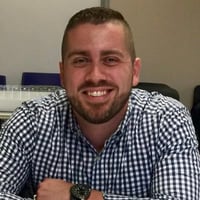
#### Miguel “Mike” Vigo
Vice President of Revenue Cycle at UC San Diego Health
#### Let's talk!
Connect with a revenue cycle expert to discover a custom plan to amplify your revenue cycle with our transformative technology and services.
[](https://insights.getixhealth.com/)
14141 Southwest Freeway Suite 300 Sugar Land, TX
United States, 77478
- [Solution](https://getixhealth.com/solutions.html)
- [Patient Access](https://getixhealth.com/solutions/patient-access.html)
- [Insurance Resolution](https://getixhealth.com/solutions/insurance-resolution.html)
- [Chart & Coding Audits](https://getixhealth.com/solutions/chart-coding-audits.html)
- [Eligibility & Enrollment](https://getixhealth.com/solutions/eligibility.html)
- [Self Pay Patient Billing](https://getixhealth.com/solutions/self-pay-patient-billing.html)
- [Workers’ Compensation](https://getixhealth.com/solutions/workers-compensation.html)
- [Professional RCM Services](https://getixhealth.com/solutions/professional-rcm-services.html)
- [Solutions](https://getixhealth.com/solutions.html)
- [Technology](https://getixhealth.com/technology.html)
- [Careers](https://getixhealth.com/careers.html)
- [Contact](https://getixhealth.com/contact.html)
- Learn
- [Blog](https://insights.getixhealth.com/blog)
- [Podcast](https://insights.getixhealth.com/podcast)
### The core behind care.
© 2026 GetixHealth. All Rights Reserved |[Privacy Policy](https://www.getixhealth.com/policy/Security_Privacy_Policy.pdf)
```json
{
"@context" : "https://schema.org",
"@type" : "BlogPosting",
"author" : {
"@type" : "Person",
"name" : "Alex Oey",
"url" : "https://insights.getixhealth.com/podcast/author/alex-oey"
},
"dateModified" : "2026-08-21T18:29:20.643Z",
"datePublished" : "2024-11-11T21:44:39.000Z",
"headline" : "Leading Through Change : Insights from VP of Revenue Cycle at UC San Diego Health",
"image" : [ "https://insights.getixhealth.com/hubfs/Podcast4.jpg" ],
"mainEntityOfPage" : {
"@id" : "https://insights.getixhealth.com/podcast/leading-through-change",
"@type" : "WebPage"
},
"publisher" : {
"@type" : "Organization",
"logo" : {
"@type" : "ImageObject",
"url" : "https://insights.getixhealth.com/hubfs/1.%20Official%20GetixHealth%20Logo%20_%20Full%20Color.png"
},
"name" : "GetixHealth"
}
}
```
```json
{
"@context" : "https://schema.org",
"@type" : "PodcastEpisode",
"associatedMedia" : {
"@type" : "VideoObject",
"description" : "Mike Vigo’s first two years as Vice President of Revenue Cycle at UC San Diego Health demonstrate a leadership approach centered on listening, trust-building, and data-driven decision-making before implementing change. He established frequent, purposeful communication across leadership levels and used collaboration rather than top-down mandates to guide operational improvements and support the system’s expansion through hospital acquisitions. Vigo identifies his greatest success not as a single performance metric, but as developing a cohesive, autonomous leadership team capable of making decisions, removing barriers, and staying aligned around shared organizational goals.",
"embedUrl" : "https://www.youtube.com/embed/uJzy3crszDQ",
"name" : "Leading Through Change : Insights from VP of Revenue Cycle at UC San Diego Health",
"thumbnailUrl" : "https://i.ytimg.com/vi/uJzy3crszDQ/hqdefault.jpg",
"uploadDate" : "2024-11-11T21:44:39Z",
"url" : "https://insights.getixhealth.com/podcast/leading-through-change"
},
"datePublished" : "2024-11-11T21:44:39Z",
"description" : "Mike Vigo’s first two years as Vice President of Revenue Cycle at UC San Diego Health demonstrate a leadership approach centered on listening, trust-building, and data-driven decision-making before implementing change. He established frequent, purposeful communication across leadership levels and used collaboration rather than top-down mandates to guide operational improvements and support the system’s expansion through hospital acquisitions. Vigo identifies his greatest success not as a single performance metric, but as developing a cohesive, autonomous leadership team capable of making decisions, removing barriers, and staying aligned around shared organizational goals.",
"image" : "https://blog.getixhealth.com/hubfs/Podcast4.jpg",
"name" : "Leading Through Change : Insights from VP of Revenue Cycle at UC San Diego Health",
"partOfSeries" : {
"@type" : "PodcastSeries",
"name" : "GetixHealth Podcast",
"url" : "https://insights.getixhealth.com/podcast"
},
"publisher" : {
"@type" : "Organization",
"name" : "GetixHealth"
},
"url" : "https://insights.getixhealth.com/podcast/leading-through-change"
}
```