---
title: The RCM to CEO Path
description: In this episode, Shawn Gretz, President, Sales and Marketing for GetixHealth and Ohio County Healthcare CEO Shellie Shouse talk about her path to CEO
image: https://insights.getixhealth.com/hubfs/SHELLIE_YT%20VIDEO%20THUMBNAIL.png
---
[Skip to main content](https://insights.getixhealth.com/podcast/the-rcm-to-ceo-path#main-content)
[](https://insights.getixhealth.com/)
- [Solutions](https://getixhealth.com/solutions.html)
- [Patient Access](https://getixhealth.com/solutions/patient-access.html)
- [Eligibility & Enrollment](https://getixhealth.com/solutions/eligibility.html)
- [Workers’ Compensation](https://getixhealth.com/solutions/workers-compensation.html)
- [Insurance Resolution](https://getixhealth.com/solutions/insurance-resolution.html)
- [Medical Coding](https://getixhealth.com/solutions/chart-coding-audits.html)
- [Early Out Self Pay](https://getixhealth.com/solutions/self-pay-patient-billing.html)
- [Professional RCM Services](https://getixhealth.com/solutions/professional-rcm-services.html)
- [Insights](https://insights.getixhealth.com)
- [Company News](https://insights.getixhealth.com/company-news)
- [Blog](https://insights.getixhealth.com/blog)
- [Podcast](https://insights.getixhealth.com/podcast)
- About
- [Our Company](https://getixhealth.com/about.html)
- [Our Technology](https://getixhealth.com/technology.html)
[Let’s Talk](https://insights.getixhealth.com/podcast/the-rcm-to-ceo-path#gh_form_id)
https://youtu.be/UaBDPROgh60
GetixHealth Podcast
# The RCM to CEO Path
 Alex Oey · July 6, 2026
[Watch on YouTube](https://youtu.be/UaBDPROgh60) [Listen on Spotify](https://open.spotify.com/episode/6xbpG7bC28IqM0DiZkZnxp?si=4JvOeBLoRpyxXQ8o0bMRuA) [Listen on Apple Podcasts](https://podcasts.apple.com/us/podcast/from-hospital-cfo-to-rural-hospital-ceo-shelie-shouse/id1773360167?i=1000775681519)
Transcript — follow along with the video
- **Shawn Gretz**(0:10) Welcome to GetixHealth ReFrame podcast, where we talk to industry leaders across the industry of healthcare, finance, leadership, and many other topics. (0:20) Today, I have with me Shelly Schell. (0:22) She has a compelling story, because Shelly came from not the traditional path to a CEO of the organization, from the physician side or the operations side.(0:32) She came from the financial side. (0:34) So we're welcoming Shelly today. (0:36) So welcome, Shelly.(0:37) Thank you. (0:37) Glad to be here. (0:39) Well, I'm glad you get to join us, because I think this is a really unique story to tell how you came into leadership overall, and not the traditional path of what most people look at, you know, from physicians or CEO of the organization.(0:53) Can you tell us a little bit about how you went along the way? (0:56) What got you to the point where you are today? (0:59) And how you got to the seat of CEO?
- **Shellie Shouse**(1:02) Sure. (1:03) So first, my early years in reimbursement, auditing, and accounting taught me how healthcare gets paid. (1:10) Before I led a department, I learned how Medicare, Medicaid, managed care contracts, cost reports, and regulations affect every decision a hospital makes.(1:20) That foundation still helps me today, because every strategic decision eventually shows up in the financial statements. (1:28) Second, leading the revenue cycle gave me a system-wide perspective. (1:32) Revenue cycle touches every department, patient access, scheduling, physicians, nursing, case management, HIM coding, billing, compliance, and finance.(1:42) I learned very early that success requires collaboration across departments, not just expertise within one area. (1:49) And third, serving as a rural hospital CFO broadened my responsibilities beyond finance. (1:58) In a rural organization, you don't have the luxury of staying in your lane.(2:03) I became involved in strategic planning, physician recruitment, service line growth, construction projects, technology, compliance, and community relationships. (2:14) That experience helped prepare me for the broader responsibilities of a CEO. (2:20) Many of those experiences are reflected in the financial turnaround, cash improvements, AR reduction, and growth initiatives I had or led throughout my career.
- **Shawn Gretz**(2:30) You know, it's interesting, because I think there's a lot of individuals out in either in the rev cycle world or sitting as a CFO of a hospital that think to themselves, this is not the traditional path of a normal CFO or anybody that's in the rev cycle world. (2:45) But it is a path that's possible. (2:47) And I think you proved that it's possible.(2:49) So it's exciting to be that. (2:51) So can I ask, did you ever set out initially? (2:54) Were you looking to be a CEO?(2:56) Was that on your checklist of the career goals for you? (3:00) Or is this something that just developed?
- **Shellie Shouse**(3:04) Well, not initially. (3:06) As a young child, I was always business minded. (3:09) As a high school accounting student, I decided I wanted to become a CPA, which is a certified public accountant.(3:16) So I earned a degree in accounting and finance and later my MBA with a focus on health care. (3:23) My goal is always to keep learning and take on challenges that stretched me. (3:27) Every role in large and small systems taught me something new.(3:31) I moved from accounting and reimbursement to finance, leadership, revenue cycle roles and CFO roles. (3:37) Looking back, each opportunity prepared me for the next one. (3:43) But one defining moment came when I was serving in a controller role.(3:48) I prayed and said, Lord, if becoming a CFO isn't your will for me, take that desire away. (3:55) If it is, open the right door. (3:56) And within a very short time, a former client called and asked me to consider a CFO opportunity at a struggling hospital, which also had a nursing home attached.(4:08) That role ultimately launched the next phase of my career. (4:13) Later, after serving as a CFO at several hospitals, I was ready for a new challenge and I prayed the same prayer for a CEO position. (4:21) I didn't get it right away, but I ended up in the CFO role, which led to the CEO role.(4:26) I hold now.
- **Shawn Gretz**(4:28) All right. (4:29) So I'm going to go off script here and ask you a question. (4:31) As a little girl, what was the job you wanted to be as a little girl?(4:36) If you sat back and said, as a little kid, in first grade, they ask you that question all the time. (4:43) What do you want to be when you grow up? (4:44) What was that role that you wanted to be when you were in first grade?(4:46) Was it a CPA then?
- **Shellie Shouse**(4:49) No. (4:50) I was already starting my own businesses back then, as I was a little taut. (4:54) At one point, I wanted to be a commercial airline pilot.(4:58) I read this thick book on, I think her name's Bonnie, the first commercial airline pilot. (5:05) Later, I remember when I was in college flying by myself to see my parents in Florida. (5:12) I had a sinus infection when I flew in that airplane.(5:15) My ears, oh my gosh, I thought I was going to die. (5:19) After that, I was like, okay, Lord, you knew I was not meant to be a pilot. (5:23) Plus, I almost went into air force(5:26) When I took the ASVAB, they were like, hey, you wear glasses. (5:31) You're not going to fly fighter jets. (5:35) I wanted to fly the jets like they do in top gun .(5:43) They were like, no, you're more meant for administration. (5:47) There are a variety of things that I thought about along the way. (5:51) I even thought about being a physician.(5:54) I loved accelerated chemistry in high school. (5:58) I really just thought, I've always been business-minded, so I need to go that route.
- **Shawn Gretz**(6:04) Sounds like it worked out well for you to get to the CEO, so that's good. (6:09) A lot of finance leaders I see are really good with numbers. (6:13) They understand the financial aspect of it.(6:15) When you become a CEO, it's more than just the numbers. (6:19) Numbers are an important piece of it, but there's a lot to go along with that, with leading people, culture, boards. (6:25) Tell me how you found yourself or found your footings in those roles over the years, or what helped you get in those roles to understand what needed as well for your organization.
- **Shellie Shouse**(6:37) The biggest lesson was realizing that numbers are outcomes, not causes. (6:42) Early in my career, I believed if I could explain the numbers clearly enough, people would automatically make the necessary changes. (6:50) What I learned is that organizations improve through people and not spreadsheets.(6:55) Financial results improve when employees understand the mission, when leaders are aligned, and when teams trust one another. (7:02) As I moved into a larger leadership role, I spent less time asking, what do the numbers say, and more time asking, why are people succeeding or struggling? (7:14) The human side of leadership became just as important as the technical side.(7:19) My husband taught me this because he was all about relationships, whereas at the beginning of my career, I was focused on my to-do list. (7:28) He would ask me, so what'd you do today? (7:30) I'd be like, I worked through lunch.(7:31) I didn't really spend time with anybody. (7:34) He'd be like, hey, you spend most of your time at work. (7:36) Don't you think you ought to get to know the people you work with?(7:40) He was right, and it's made all the difference. (7:43) On another note, after I became a fellow of the Healthcare Financial Management Association, later I became a fellow of the American College of Healthcare Executives, which involves studying material that prepared me for roles outside of spreadsheets.
- **Shawn Gretz**(8:02) I love it, especially your first quote, the conversation that we're more than just numbers. (8:06) Numbers become the outcomes. (8:08) Every single day, that has to be foremost in most financial leaders' minds.(8:13) They're just the outcomes, but everything else that we do up until that moment is what the people, the culture, the communications, and especially for the younger generations to get out and meet people, especially if you work from home, create collisions where you can, and I think you're going to be a lot better off. (8:32) Can you tell me a time, a moment when you realized, you know what? (8:37) This was it when I said, you know, I know I can run this entire organization.(8:42) Where was that? (8:43) Where were you sitting, or kind of how it came to you?
- **Shellie Shouse**(8:49) I'd say there wasn't a single moment. (8:51) It happened gradually as I began leading projects across multiple departments. (8:56) I found myself helping solve problems in operations, physician practices, compliance, information technology, construction, strategic planning, and patient access, not just finance.(9:08) And eventually, I realized that most executive leadership challenges aren't financial problems. (9:14) They're people problems, communication problems, or prioritization problems. (9:19) I also worked through my own personal challenges outside of work, which taught me empathy and that not everything is always black and white.(9:29) And that's when I started thinking less like a CFO and more like a CEO. (9:34) I also gained more confidence after obtaining my Rural Health CEO certification through a great training program via the National Rural Health Association.
- **Shawn Gretz**(9:46) Something I see constantly when I talk to individuals is you're always aspiring for something else, right? (9:53) For you, it was the FFH of May or the ACHE Fellowship. (9:58) And now the Rural Health Co-op.(9:59) That's something that I think is important to anybody that's looking at leadership roles across is that you have to aspire to continue to evolve. (10:07) If you don't continue to evolve, you're obviously leaving yourself behind. (10:15) So if someone's aspiring to be a CEO and understanding what it looks like, what other items or areas, example being board leadership or other things that they literally should be looking at overall as well?
- **Shellie Shouse**(10:28) Well, I think you need to be a learner. (10:30) And you asked about, you know, board leadership. (10:34) I'd say the board works at the governance level while management works at the operational level.(10:40) One mistake that executives make is assuming every board member wants every detail. (10:46) They're volunteers, so most don't. (10:48) They want confidence that leadership understands the issues as a plan and is managing risk appropriately.(10:55) Great board relationships are built on trust, transparency, and communication. (11:01) And if bad news exists, we tell the board immediately or early as we can. (11:07) If a strategic opportunity exists, we educate them on that opportunity.(11:11) And the CEO's role is to help the board make informed decisions and not simply deliver reports.
- **Shawn Gretz**(11:17) Oh, that's a fantastic advice, right? (11:19) The governance of a board versus actually communicating what is needed versus communicating vomiting on them of everything that's going on. (11:27) There's a huge difference there.
- **Shellie Shouse**(11:29) Yeah, we don't want board meetings.
- **Shawn Gretz**(11:31) Yes, yes. (11:32) So tell me this, right? (11:34) So you have a unique perspective.(11:35) You came through the CPA. (11:36) You came through the rev cycle. (11:38) You came through a world that is, you know, numbers driven.(11:41) But that is something that's lacking today, I think, in a lot of hospital, not only physicians, but also boards. (11:49) How do you take that and that knowledge that you built throughout the years? (11:53) And how do you utilize it as a CEO?
- **Shellie Shouse**(11:55) Well, I'd say, you know, my revenue cycle experience gave me a unique appreciation for how operational decisions affect financial income or outcomes. (12:06) Many leaders see revenue cycle as a back office function, and I see it more as a strategic function. (12:14) The revenue cycle starts when the patient schedules an appointment and continues until the account is resolved.(12:21) It affects access, patient experience, physician satisfaction, compliance, quality reporting, and financial performance. (12:30) And because of my background, I tend to ask questions about process design, reimbursement implications, payer behavior, credentialing, and cash flow earlier than many CEOs might. (12:45) You know, I've experienced in the past being the revenue cycle.(12:48) Oh my, we did not know that position was coming, and now we're behind in credentialing. (12:53) And that affects your payments. (12:55) So I think about things like that.(12:57) My revenue cycle background taught me that every operational decision has a financial consequence, and every financial outcome has an operational cost.
- **Shawn Gretz**(13:09) So one of the things that we talked about previously, or had conversations about, is that you worked in, you know, not only the point of service collections, you helped recover underpayments. (13:18) You improved the cash reserves and built reserves for the organization. (13:23) Today, as a CEO, what is the, if I had to say, what is the one metric that you're looking at as a CEO?(13:29) What does that look like to you? (13:30) And what do you monitor as a CEO?
- **Shellie Shouse**(13:34) Cash, specifically sustainable operating cash flow. (13:38) A hospital can report positive margins and still have cash problems. (13:42) Cash provides flexibility and allows organizations to invest in people, facilities, technology, and new services.(13:49) That said, cash is the scorecard. (13:52) To understand why cash is moving, I also watch AR days, denial rates, labor costs, productivity, payer mix, and operating margin.
- **Shawn Gretz**(14:02) Rural healthcare today is struggling. (14:04) A lot of facilities are, and you work in rural healthcare today. (14:07) If you were, you know, going into a hospital tomorrow and helping them, you know, as a CPA, I'm sure you did this many times, but also what would you help that hospital that's struggling today to be able to say, how do I, how do I get to a point of being sustainable again as an organization?(14:23) Because it is, it is a challenge right now for a lot of facilities out there.
- **Shellie Shouse**(14:28) Yes, first I'd examine cash because cash buys time. (14:34) In my role, I hope that and feel like I'm supportive of the CFO role in monitoring that cash because I understand. (14:42) And then I'm always looking for those opportunities.(14:44) Like, is our revenue cycle really performing like it should? (14:48) Are there quality scores we could improve to improve our payments? (14:54) Things of that nature.(14:56) Second, I'd evaluate revenue cycle fundamentals because that's where many hospitals unknowingly leave money on the table, such as, of course, AR days, denial trends, DNFB, which is do not final bill, point of service collections, and underpayment monitoring. (15:13) And third, I'd evaluate culture and leadership alignment because even the best turnaround plan fails if leadership isn't pulling in the same direction.
- **Shawn Gretz**(15:23) No, that's an interesting one, because it's still, it goes back to the conversation we had before. (15:27) It's about the people at some point. (15:29) It'll always come back about the people, those that are around you, marching in the same area to be able to get to the goals that you have as an organization.(15:38) You know, one of the things I would say is there's times when I see organizations really look at revenue cycle and not see the importance of it. (15:45) How do you elevate that as a CEO, or how do you elevate that overall as an organization?
- **Shellie Shouse**(15:53) Well, when it's working, and outside vendors you've hired to help you with specific tasks, the revenue cycle operate well, nobody notices it. (16:02) I will say in today's environment, you know, with Facebook and such, you hear pretty quick if there's an issue. (16:11) But people notice also a new building, a new physician, a new service line.(16:17) They don't necessarily notice clean claims, fewer denials, or improved collection processes. (16:23) But the revenue cycle is often the difference between having resources to invest in patient care versus constantly fighting financial pressure. (16:32) And I've seen organizations recover significant revenue simply by improving processes, reducing AR, improving front-end registration, and identifying underpayments that nobody knew existed.(16:45) Those efforts can create millions of dollars of value, which, of course, helps us support our mission to provide the best patient care possible.
- **Shawn Gretz**(16:55) You know, it's interesting. (16:55) Jetix, we talk about this a lot. (16:57) A lot of times in patient experience, it doesn't come down to clinician care is fantastic.(17:03) Every organization I talk to, people respect their doctors and treat their doctors with upmost care. (17:09) But a lot of times when it comes down to the rev cycle world, it can be the collisions of either the patient experience from the insurance billing or the patient experience from the bill that gets sent out. (17:19) And it's such an important piece of it to understand is, are we creating collisions or are we actually improving the experience?(17:26) And that's something that everyone needs to pay attention to. (17:32) So is there items as a CEO of a hospital that you say is a harder decision now versus what you were when you were a CFO? (17:41) And the entire weight of that facility is on your shoulders.(17:46) Tell me more about how you think about that.
- **Shellie Shouse**(17:49) Well, as a CFO, most decisions could be evaluated through a financial lens. (17:55) And as a CEO, every decision has multiple dimensions. (17:59) You know, that gray matter I was talking about where everything's not black and white.(18:03) You must balance finances, quality patient experience, physician relationships, workforce culture, community expectations, and long-term strategy simultaneously. (18:16) The hardest decisions are rarely about numbers. (18:19) They're usually about people.(18:21) And sometimes there are several good options and no perfect answer. (18:26) That's where judgment, values, and mission becomes extremely important.
- **Shawn Gretz**(18:30) Such an important piece to understand the values, not only of yourself, but also of your organization and how you make decisions. (18:37) Because I think more and more organization are understanding that that's a lens that has to be decided on through every decision that the organization has. (18:47) And it drives all of us to be able to make the best decisions possible.(18:52) All right, let's go back. (18:53) It's a time of the year when people are starting their career. (18:57) If you were back and starting your career newer to the healthcare industry, 25-year-old, and you had to sit down with yourself, what would you tell yourself, your 25-year-old self getting new into healthcare?
- **Shellie Shouse**(19:10) I would tell her three things. (19:14) First, don't worry so much about having your entire career mapped out. (19:18) Focus on learning, growing, and delivering results where you are.(19:23) So in other words, bloom where you may end up needing to be planted, such as another city than desired for family reasons, which was my situation. (19:33) I had to move a few times when I really didn't want to, but I just looked for the opportunities where I went. (19:39) And second, invest as much energy into relationships and leadership skills as you do technical skills.(19:47) Your ability to influence people will ultimately matter more than your ability to analyze a spreadsheet. (19:55) And third, be willing to take a challenge before you feel completely ready. (20:00) Most growth occurs when you feel slightly uncomfortable.(20:05) And looking back, every meaningful opportunity in my career came from saying yes to something that stretched me. (20:13) And I would remind myself that leadership isn't about titles. (20:17) It's about helping people accomplish things together in the service of a mission larger than themselves.(20:24) And today as CEO, I still draw on those lessons as we've expanded from 10 locations to 14. (20:32) I, at least in the last few years, grown provider services and continued increasing access to care across our region.
- **Shawn Gretz**(20:43) You know, it's interesting, right? (20:44) As we all look at leadership and look at who we are and where we came from, talking to ourselves back and when we're younger generations and younger individuals, it's important to recognize the importance of how you recognize the and grow those individuals as well. (21:00) Because we all, as you've talked about before, we're all based upon the people that we have working with us.(21:07) So those are great reminders for everybody that's new to the career.
- **Shellie Shouse**(21:11) All right. (21:12) I was gonna say, my career taught me that financial stewardship and mission stewardship are really the same thing. (21:18) When healthcare organizations are financially strong, they can better serve patients, employees and the communities that depend on them.
- **Shawn Gretz**(21:26) And they depend on us a lot, especially in your role, especially for our rural health facility. (21:33) So we want to wrap this up by saying, thank you very much for taking the time and joining us for the Reframe podcast. (21:40) We do appreciate all that you do and all that you helped, not only the rural health community and educating across the country, but also the capabilities that you bring to your local facility as well and growing them as well.(21:56) So we appreciate the time. (21:57) Thank you for joining us today, Shelley. (21:59) It's been a really great conversation.(22:02) I hope you have a fantastic day.
- **Shellie Shouse**(22:04) You too, thanks.
Executive summary
In this episode, host Shawn Gretz, President, Sales and Marketing for GetixHealth and Ohio County Healthcare CEO Shellie Shouse talk about her path to CEO from the finance world and how it gives her a unique view into hospital leadership. She highlights the advantages of starting with a CPA and building on it with an MBA in healthcare and additional certifications. Shawn and Shellie also discuss the pressures of distressed hospitals and the sequence she uses to make improvements, what information hospital boards need, and what CFOs should know before stepping into the CEO role.
## Key takeaways
- The cash/revenue cycle fundamentals/culture sequence for distressed hospitals
- Why "numbers are outcomes, not causes" should change how finance leaders diagnose performance
- The credentialing-to-cash blind spot in physician onboarding
## More on this topic
[Podcast Episode Compliance in New Financial Assistance Laws](https://insights.getixhealth.com/podcast/new-financial-assistance-laws) [Podcast Episode When Financial Counseling Becomes Case Management](https://insights.getixhealth.com/podcast/when-financial-counseling-becomes-case-management) [Podcast Episode Charting the Future: Insights from Chief Information Officers in Healthcare](https://insights.getixhealth.com/podcast/insights-from-cio) [Podcast Episode Design for the Loops ,Not the Line: Rebuilding Revenue Cycle After a Leadership Vacuum](https://insights.getixhealth.com/podcast/design-for-the-loops-not-the-line) [Podcast Episode Leading Through Change : Insights from VP of Revenue Cycle at UC San Diego Health](https://insights.getixhealth.com/podcast/leading-through-change) [Podcast Episode Turning Coding Needs into Coding Success with AI](https://insights.getixhealth.com/podcast/turning-coding-needs-into-coding-success-with-ai)
### Meet The Speakers
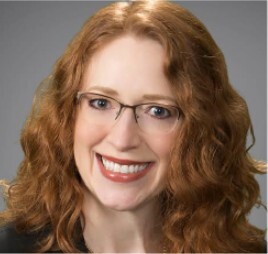
#### Shelly Shouse
Chief Executive Officer at Ohio County HealthCare
Shellie D. Shouse, CPA, MBA, FHFMA, FACHE, RHCEOC is Chief Executive Officer of Ohio County Healthcare, a nonprofit rural healthcare system serving western Kentucky. Since becoming CEO in 2022, she has led significant organizational growth, expanding the system from 10 to 14 locations, growing the workforce to approximately 850 employees and 75 providers, and increasing annual net revenue to more than $115 million. With more than 27 years of healthcare leadership experience, Shouse has expertise in executive management, finance, operations, revenue cycle, and strategic growth. She has led the acquisition and integration of specialty physician practices, expansion of outpatient and surgical services, implementation of in-house pathology and electronic health record systems, and execution of major capital and facility modernization projects. Prior to serving as CEO, Shouse was Chief Financial Officer of Ohio County Healthcare from 2017 to 2022, where she played a key role in strengthening the organization’s financial performance and supporting its long-term growth strategy.
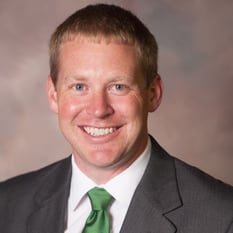
#### Shawn Gretz
President of Sales and Marketing
#### Let's talk!
Connect with a revenue cycle expert to discover a custom plan to amplify your revenue cycle with our transformative technology and services.
[](https://insights.getixhealth.com/)
14141 Southwest Freeway Suite 300 Sugar Land, TX
United States, 77478
- [Solution](https://getixhealth.com/solutions.html)
- [Patient Access](https://getixhealth.com/solutions/patient-access.html)
- [Insurance Resolution](https://getixhealth.com/solutions/insurance-resolution.html)
- [Chart & Coding Audits](https://getixhealth.com/solutions/chart-coding-audits.html)
- [Eligibility & Enrollment](https://getixhealth.com/solutions/eligibility.html)
- [Self Pay Patient Billing](https://getixhealth.com/solutions/self-pay-patient-billing.html)
- [Workers’ Compensation](https://getixhealth.com/solutions/workers-compensation.html)
- [Professional RCM Services](https://getixhealth.com/solutions/professional-rcm-services.html)
- [Solutions](https://getixhealth.com/solutions.html)
- [Technology](https://getixhealth.com/technology.html)
- [Careers](https://getixhealth.com/careers.html)
- [Contact](https://getixhealth.com/contact.html)
- Learn
- [Blog](https://insights.getixhealth.com/blog)
- [Podcast](https://insights.getixhealth.com/podcast)
### The core behind care.
© 2026 GetixHealth. All Rights Reserved |[Privacy Policy](https://www.getixhealth.com/policy/Security_Privacy_Policy.pdf)
```json
{
"@context" : "https://schema.org",
"@type" : "BlogPosting",
"author" : {
"@type" : "Person",
"name" : "Alex Oey",
"url" : "https://insights.getixhealth.com/podcast/author/alex-oey"
},
"dateModified" : "2026-08-17T13:33:17.170Z",
"datePublished" : "2026-07-06T17:11:30.000Z",
"headline" : "The RCM to CEO Path",
"image" : [ "https://insights.getixhealth.com/hubfs/SHELLIE_YT%20VIDEO%20THUMBNAIL.png" ],
"mainEntityOfPage" : {
"@id" : "https://insights.getixhealth.com/podcast/the-rcm-to-ceo-path",
"@type" : "WebPage"
},
"publisher" : {
"@type" : "Organization",
"logo" : {
"@type" : "ImageObject",
"url" : "https://insights.getixhealth.com/hubfs/1.%20Official%20GetixHealth%20Logo%20_%20Full%20Color.png"
},
"name" : "GetixHealth"
}
}
```
```json
{
"@context" : "https://schema.org",
"@type" : "PodcastEpisode",
"associatedMedia" : {
"@type" : "VideoObject",
"embedUrl" : "https://www.youtube.com/embed/UaBDPROgh60",
"name" : "The RCM to CEO Path"
},
"datePublished" : "2026-07-06T17:11:30Z",
"description" : "In this episode, Shawn Gretz, President, Sales and Marketing for GetixHealth and Ohio County Healthcare CEO Shellie Shouse talk about her path to CEO",
"image" : "https://blog.getixhealth.com/hubfs/SHELLIE_YT%20VIDEO%20THUMBNAIL.png",
"name" : "The RCM to CEO Path",
"partOfSeries" : {
"@type" : "PodcastSeries",
"name" : "GetixHealth Podcast",
"url" : "https://insights.getixhealth.com/podcast"
},
"publisher" : {
"@type" : "Organization",
"name" : "GetixHealth"
},
"url" : "https://insights.getixhealth.com/podcast/the-rcm-to-ceo-path"
}
```