
GetixHealth Podcast
Beyond Bots: What Rev Cycle Leaders Need to Rethink About AI
 Alex Oey · May 29, 2026
Transcript — follow along with the video
-
Shawn Gretz(0:11) Welcome to Revenue Cycle Reframe, where we get to talk to industry leaders in the revenue cycle across the industry. (0:18) Today, my special guest is Michael Laukatis. (0:20) He comes to us from UT Southwestern, where I'm going to read this title because it is long. (0:25) It's the Director of Revenue Cycle Analytics, Accounting, and Quality Assurance. (0:30) Thank you for joining us today. (0:32) You know, one of my favorite questions, and I always ask this, is how did you start in the revenue cycle?
-
Michael Laukatis(0:38) Oh, I got my startup in Montana. (0:39) I was looking at job opportunities, and there was a small hospital in Missoula, Montana, called Community Medical Center, and they had an opening for like an IT person to help support the revenue cycle side. (0:52) I applied, went down there, had a great interview, and got hired pretty much on the spot, and that's where I got my first taste of revenue cycle.
-
Shawn Gretz(1:02) So what was that job? (1:03) What was it? (1:03) Was it in analytics right away, IT, or how did you get into this side of the world?
-
Michael Laukatis(1:08) It was more being like an analyst. (1:11) So I was doing builds and screen builds and workflow modifications, and so that was kind of my intro to revenue cycle, and that was all in Siemens. (1:21) And then I would say 2010, I moved down to Texas and started working in their IT department, (1:27) doing similar things, but this time converting Siemens to Epic, and then about eight years (1:33) ago, that's where I really got into the analytics side of it, when my current boss at the time (1:38) asked if I would like to start the analytics group in the operations side, and I was biting (1:43) at the chomp to start that, and so I've been doing that now for about eight years.
-
Shawn Gretz(1:46) Eight years. (1:47) So we're going to make the rest of the revenue cycle world jealous today, and that's because we're going to talk to Mike about his duties and his jobs, because he is one of the foremost experts, I would say, in analytics, in RPAs, in AI across the revenue cycle, and I know there's organizations out there that would really, really love to have your skill set. (2:10) So tell me a little bit about what does your job look like today? (2:13) How has it expanded? (2:14) Where does it go from today into the future as well?
-
Michael Laukatis(2:18) Sure. (2:19) So about eight years ago, we were strictly focused on the analytics side, gathering the data, getting the reports, everything set up. (2:25) About six years ago, we were like, great, we have the data, now let's do something with it. (2:29) Let's do that analysis portion, and that's where we started analyzing workflows, looking at gaps, trying to find money that we might have been missing, and we looked at the biggest chunk was, for us, was we have all of these large volume, low complexity jobs that we have people spending hours and hours and hours doing. (2:47) We should be able to automate those things, and so that's where we really stepped into the automation realm. (2:52) And then about three years ago is where we stepped into the AI realm, and that was mainly with content creation.(2:58) Agents came about a year after that, and that's where we're really starting to get into now is the agentic programming side. (3:04) Our first agents that are going to be doing epic functionality and denials management and everything, that's going to be coming here in the next month and a half.
-
Shawn Gretz(3:11) So are those all built in-house by you and your team, or how does that work?
-
Michael Laukatis(3:16) It is. (3:16) We have partnered with a group called Tarpon, and we are part of that organization, and we share ideas and everything with them, and we've outsourced a little bit of the programming to them as well, but we're utilizing the program called UiPath, and we have been programming all of that in-house.
-
Shawn Gretz(3:35) So if you went back and started over again today, would you do the same things that you did? (3:40) It was starting on the analytics side to learn what's happening and then build it out the same way you're doing it today, or would you look at it a little bit differently for someone that's maybe brand new to the analytics, AI, and or RPAs?
-
Michael Laukatis(3:53) I would pretty much almost do it the same, just maybe a little quicker in each step. (3:58) The one thing I've seen organizations that have failed do is to just put bots in just to have bots. (4:04) We call these emotional support bots, and it's just to tell the uppers, hey, we've actually got an RPA division, we have bots running, but what they've done is they've taken a workflow that was broken and just put a bot on top of it. (4:16) So it's not an efficient workflow, we don't even know if it's a good workflow or not. (4:21) So what we do is we get in, we do that Lean Six Sigma program project and try to make it as lean as possible, then analyze it, is it still a bot contender? (4:30) If it is, then we'll bot, if not, we won't.
-
Shawn Gretz(4:33) So when you look at a project like that, how do you go about it? (4:36) What's the start of it? (4:37) How did you, from a Lean Six Sigma strategy standpoint?
-
Michael Laukatis(4:41) So again, we get to the gimbal. (4:43) So we sit with the end users, we're recording sessions, we're looking at timing. (4:48) And while that is going on, I'm in the background and I'm asking the five whys. (4:52) I'm like, why exactly are we doing this? (4:53) What is the outcome we're expecting? (4:55) What is the benchmark KPIs that we're receiving now? (4:58) Are we getting 20% return, 30% return? (5:01) And as I'm sitting down with them, we're also doing the Lean Six Sigma project to try to get that even better. (5:07) And then I say, okay, now that I understand the workflow, now we've got this process design document in place(5:12) Let's see how we can make the bot even more efficient. (5:14) And then let's see how the bot's doing on some of the return. (5:18) Are we getting faster?(5:19) Are we reducing timely filing? (5:21) Are we getting more accurate results? (5:23) And then we'll turn those metrics along as well.
-
Shawn Gretz(5:25) The five whys, such an important piece to anybody that's doing project management. (5:29) And along with the word that you use, the GIMBA, get to the GIMBA.
-
Michael Laukatis(5:32) Get to the GIMBA.
-
Shawn Gretz(5:33) Tell me, where did you learn those strategies? (5:36) Because those are both project management strategies that anybody theoretically should have in their toolbox when they're doing projects.
-
Michael Laukatis(5:43) Yeah, absolutely. (5:44) So I started here at UT Southwestern in 2010, and they had been offering leadership classes to those who were wanting to expand and branch their wings. (5:54) And so one of the classes was a Lean Six Sigma class. (5:56) It was a white belt class and a yellow belt. (5:58) I think they offer all the way up to green belt here. (6:01) And I was like, you know what?
(6:03) I might not be a project manager now, but someday I plan on leading projects. (6:07) I plan on helping optimize things. (6:09) So I took that class, and it was a great class. (6:12) You know, pre-COVID, it was hands-on. (6:13) We were all in the classroom. (6:14) Got to do about a week's worth of work.(6:16) And it helped me realize, like, wow, there's a lot of things that we should be doing upfront before we just start implementing things. (6:22) A lot of the planning stage stuff that we might have been missing beforehand. (6:25) A lot of the analytics that needs to happen or occur. (6:28) Because how can we measure if we're successful if we don't know where we started?
-
Shawn Gretz(6:31) You know, one of my favorite classes when I took my MBA was project management. (6:36) It's one of those things that anybody, it doesn't matter where you are on the rep cycle, can use. (6:41) And you can learn things. (6:42) And it's not, you don't have to have your organization offer you these classes. (6:46) I think these are widely available on YouTube videos and other capabilities to be able to understand how to do project management. (6:53) But it's, as you said, if you start straight and you start in the beginning and start really thinking about what should the project end goal be and really plan it out at the beginning, it makes it so much easier. (7:05) That's a great advice for anybody that's starting to get into analytics and or AI or RPAs or anything that's along the lines of improving the rep cycle. (7:17) Tell me one other strategy that you have as a leader in this area that others can take away as well.
-
Michael Laukatis(7:24) You know, it's okay to use the word no. (7:27) A lot of these cases, you might be getting people from higher levels and everything saying, hey, we need to do this automation. (7:33) We need to do this workflow.(7:34) We need to be doing this, this, this. (7:35) And it feels like, oh, I have that, you know, mandate. (7:38) I must automate this workflow or I must do this. (7:42) And you'll waste a lot of time on workflows that maybe don't have a lot of volume or that's probably just the workflow that's getting the most vocal trend. (7:50) That's the one that's yelling the most when it truly, you know, wouldn't save us a lot of time. (7:54) There are bigger fish to go for in the ocean, so.
-
Shawn Gretz(7:57) That's a fantastic one as well, right? (7:59) And even project scope creep, that happens quite a bit. (8:03) And especially individuals that I would suggest would be the SMEs across your organization and listening to them and making sure they understand the process first. (8:12) Are they have it fully scoped to what they're currently doing today? (8:15) I think a lot of people missed that step in the beginning of saying, tell me your current scoped upgrade process that you're doing today. (8:22) Because if they don't know what their current scope is, how can they design a future scope?(8:26) Is that, you're shaking your head there. (8:27) Anything you want to say in regards to that?
-
Michael Laukatis(8:30) You know, before we started automating, we actually developed the SOP library. (8:34) And so all of the end users, all the SMEs had to look at all their workflows, get all their SOPs. (8:39) We centralized them, knowing that we would use them not only for automation standpoints for idea generation and looking at workflows, but also knowing that the AI realm was upcoming and that co-pilot could have access to all of our SharePoint sites. (8:53) So we actually have an AI agent called Sophie, S-O-P-H-I-E, that helps us gather all that information. (9:00) Or if people have questions about workflows, they could ask Sophie and Sophie can get them not only like a step-by-step diagram, but also point them to where the SOP lies, bring up the actual document and point out any issues that they might be having.
-
Shawn Gretz(9:12) I love that approach. (9:14) SOPs are so important and so many organizations today still don't have SOPs built for their entire process. (9:21) Where would you, if you, if you had to recommend the starting point of someone needs to start with SOPs, where would you recommend how they should start that process?
-
Michael Laukatis(9:31) So what we came across was a lot of people already had something like an SOP. (9:36) So we formalized an SOP document, formalized the template and a standard and said, Hey, go through your workflows, put them on these templates. (9:43) This will help us, you know, standardize ideas, standardize things so that if we were training anyone to come into your apartment day one, they would have a great sound training document. (9:53) I think where we are seeing a lot of errors is keeping those SOPs up to date. (9:58) So we use those SOPs and our quality. (10:01) That's one of the job words in my title for quality assurance(10:05) And anytime we have any discrepancies, we always go back to the SOP. (10:08) And we always say, if it's not documented, it didn't happen. (10:11) Or if it's not documented, we can't test it.(10:14) So we try to use that mentality when going back and forth with staff.
-
Shawn Gretz(10:18) Mike, that's an important one as well. (10:20) We too, you know, obviously any organization that has SOPs understands that there are times when you take a look at it and they become out of date or they haven't been updated with the latest process change that did occur. (10:31) It's one of those that's a reoccurring issue that you have to take a look at as well.
(10:36) And many of our directors across our organizations have timeframes. (10:39) When am I going to review this SOP? (10:41) And when am I going to go at it again and rechange it(10:44) Because it does change.(10:45) And things, you know, processes changes all the time for a lot of organizations. (10:50) But it's important when you keep those updated. (10:52) And I love the idea and the idea of actually utilizing AI for it as well, because that's going to be something that's going to be important going forward, because it can read those SOPs and give you feedback on them as well.
-
Michael Laukatis(11:04) It does. (11:05) And it also allows us to know which ones are due up for renewal. (11:07) I can ask and say, what are my 10 oldest ones or my 15 oldest ones?
(11:11) And then another thing we're doing is we're also uploading all of our upgrade information as well. (11:17) So whenever we're doing epic upgrades, whenever there's upgrades in workflows, we can upload that into Sophie and then she can analyze those upgrade documents and say, hey, you're upgrading workflow one, two, three. (11:27) Here's the SOP.(11:28) SOP does not match what the new upgrade workflow is going to be. (11:31) Someone needs to review this and flag it for someone to do.
-
Shawn Gretz(11:34) That's fantastic. (11:35) That's that's an amazing approach in order to make sure you're updating the SOPs when workflow change design changes as well. (11:42) How do you build in analytics to those SOPs? (11:44) I've seen some organizations do it well, and I've seen some organizations where that that's a struggle for them. (11:49) Do you have metric based?
-
Michael Laukatis(11:51) So when we're looking at SOPs, are you talking about the analytics to to see, you know, how many people have opened it, how many times it's been reviewed? (12:01) Yes, that will keep the eyes for the processes as well. (12:05) Do you build those in with those SOPs? (12:07) We don't put the KPIs into the SOPs, but we do put analytics around, you know, which workflows are being looked at, which ones haven't stale, stagnant work SOPs, and then which ones are being utilized the most, because then we can say, OK, let's get those leadership talking to the ones who aren't updating theirs. (12:25) Do they have a routine? (12:27) Do they have a quarterly review?(12:28) Like, what are they doing different that the other organization pieces aren't and then try to get them together so that they can communicate better?
-
Shawn Gretz(12:35) You know, this is great on SOPs, but I'd like to pivot a little bit and start talking a little bit about your analytics, because I think that's that's where you started. (12:42) Right. (12:42) Data governance and capability in order for to build out the analytics to be able to understand what's happening. (12:47) So tell us a little bit more about that strategy.
-
Michael Laukatis(12:50) Sure. (12:51) When we first started the analytics group, it was basically myself and one other person. (12:54) And that other person was mainly in charge of payer policy updates and payer policy programming within Epic. (13:00) And so what I did is I basically sat in all the meetings with all the upper leadership. (13:04) And my goal was to have the report done before the meeting ended because I was sitting there. (13:10) We can understand it.(13:11) I knew the data. (13:12) I built the data. (13:13) And so getting that data out as quickly as possible and as accurately as possible was one of our first priorities.(13:20) Then the team expanded and we slowly started gathering more and more information and better and better tools because before it was just SQL. (13:26) Then we implemented Power BI. (13:28) Now we've gotten into Tableau.(13:30) Now we're able to do Python programming, R programming to trend, to find missing charges, to find details that we wouldn't have been able to find before. (13:39) And then once we put our AI layer on top of that, it's going to give us charge recommendations. (13:44) It's going to give us denial recommendations.(13:45) It's going to find all of these little nooks and crannies that we weren't able to find just due to time constraints.
-
Shawn Gretz(13:52) You know, it's interesting. (13:53) Most organizations, there's an argument to be had. (13:56) Does the analytics department report up to IT or does it report to the operational side? (14:02) And it sounds like the choice that Southwestern made was to move it to the operational side and the RevCycle folks. (14:08) Do you think that's a wise choice for most organizations? (14:12) And if so, how can a RevCycle leader sell that to their leadership that needs to be reporting to operations?
-
Michael Laukatis(14:19) So I think our side right now, like we have a really good analytics team at UT Southwestern that lives under the IT department. (14:27) What was really failing was the speed of which they could reproduce the reports and accuracy of like maybe our first report pass. (14:35) Those report writers were writing reports for bunches of different software and different workflows in different areas.
(14:41) So they weren't really RevCycle-centric. (14:44) There was a lot of back and forth with, hey, this is what we wanted, but you gave us this. (14:49) And so there was a communication breakdown. (14:51) To reduce those breakdowns, we were able to get somebody who had a background in RevCycle, a background in technical, a background in analytics, and kind of bridge that gap so that when we're having conversations with our director level, VP level, we're able to speak the same language. (15:05) We understand what exactly they're looking for without having to have like a detailed, I need this column with this exact cell and stuff like that. (15:13) We were able to kind of get the gist. (15:14) And we always start the conversation with what exactly are you trying to get out of this report? (15:19) Because sometimes what the ask is isn't really what the end goal should be. (15:22) And then we can kind of help frame them.(15:25) Okay, I know what you're asking for. (15:27) This is the ultimate end goal in mind, again, coming down to the five whys. (15:30) And then we can give a better product or a better solution in a way quicker time than a non-centralized or a centralized IT person could.
-
Shawn Gretz(15:40) Now, that's a fantastic way to approach it. (15:43) Any other selling points that you would sell to the IT folks and make sure they understand the importance and the urgency of RevCycle being independent in a sense from the decision-making process?
-
Michael Laukatis(15:54) Sure, so every time we come across an issue, every day of lag that isn't analyzed or fixed is revenue loss. (16:02) And so by having the reports as quickly as possible, being able to access the data almost real time is very key and important. (16:09) I will tell you though, even though we live outside of IT, we follow all IT governance. (16:13) We follow all IT policies and procedures. (16:15) We go through them to have request access. (16:17) We go through them if there's any questions or thoughts or concerns.(16:21) So we are very much in tandem with our IT analytics group.
-
Shawn Gretz(16:25) That's a fantastic advice, right? (16:27) Making sure that you follow those policies, procedures, that you're not going rogue based upon the data as well. (16:32) Make sure that you're protecting the data the way they require the data to be protected. (16:37) That's an important piece because if they're going to trust you, you're going to need that information to be in their governance and policies. (16:43) And then they're more likely to allow you to do the items that you need to do in order to make the improvements of RevCycle. (16:49) So tell me how you're looking at RPAs altogether. (16:53) What does that look like to you from a standpoint of how do you improve the process? (16:58) And actually, why don't we start from the basics? (17:00) What if someone doesn't even know what an RPA is (17:02) Can you give the definition of what you would define an RPA as?
-
Michael Laukatis(17:05) Sure, actually I did career day at my kid's school last Friday. (17:08) And to define RPA to them is it's a robot that basically can do whatever it is that you tell them to do and only what you tell them to do. (17:19) So we kind of had me standing up and they would give me directions on how to pick up a piece of paper and throw it away (17:25) And I was like, you have to be very specific because the bot isn't going to know these certain things like maybe it would with a Gentic AI. (17:32) I was like, you have to tell me to bend, how to bend, where to bend, how to pick up, what piece to pick up, where to put that piece, how to hold it, how to, you know, and go into that granular of the detail. (17:41) Because if you don't, the bot is going to not know what to do next or miss or do something really weird.(17:47) So we are very particular in all of our bot executions. (17:51) If for ever any reason the bot were to go rogue, it immediately stops and, you know, logs a fault, alerts one of our maintenance staff and then goes on to the next account.
-
Shawn Gretz(18:03) Yeah, it's one of those where if you can replace the items that are, you know, automated, you want to automate the items that are really repetitive that people are doing every single day. (18:14) We click here, click there, click here, and whoop here type of scenarios. (18:18) You can save a lot of labor costs across an organization. (18:22) How much do you think you've saved so far from an RPA perspective, do you think?
-
Michael Laukatis(18:25) Oh, I can tell you almost to the penny, but we're about 4.5 million in the past six years and 1.5 million last year alone. (18:33) And that's just an FTE savings where we've taken those FTEs and moved them to other areas of our revenue cycle. (18:40) That's not including things like making sure that it's more accurate because there are less likely to be typo mistakes, less likely to be mistakes made. (18:49) And also quickness. (18:52) One of our bots is a Medicaid retrieval bot that will go out and try to find Medicaid coverage for patients where we had four staff members doing this. (19:00) They could do 16,000 roughly maybe once every three months and our bot could do it once every 16 days.
-
Shawn Gretz(19:08) That's fantastic. (19:09) Not only are you improving the patient experience in that instance where Medicaid is being found faster for the patient to be qualified for, so the patients aren't receiving that self pay bill, but also it's something that's one of those jobs that are really boring, I would say, for many of the people that were doing it. (19:28) And they can be up-skilled to do something different in the organization and that's probably more beneficial and more complex as well.
-
Michael Laukatis(19:35) Yeah, and that's actually how I got into automation. (19:38) I was given very repetitive tasks when I started out my career in 2001 and I was like, there's got to be a better way because I see everyone else doing these really cool activities and cool functions and I am stuck doing the most manual job on the planet. (19:51) I picked up some books that we had some software on the shelf and I taught myself how to automate these things. (19:57) And so that next time the boss came around and said, what do you got? (20:00) I said, I've got tons of free time. (20:01) Let's give me something a little bit harder.
-
Shawn Gretz(20:04) That's fantastic. (20:06) The initiative that you took to be able to do that as well. (20:09) And I'm sure there's many people in the rep cycle organizations across that theoretically could have that skillset. (20:15) So if someone saw someone that has that mindset to be able to say, I want to automate this, how would you push them or say, suggest to them to be able to take it and move it forward?
-
Michael Laukatis(20:26) Absolutely. (20:26) So we have a mentorship program here that we started a couple of years ago to find that talent that you speak of. (20:32) Anybody who has a technical expertise or anybody who's got really great imagination or any kind of skills like that, we will sit with them on our own time, sit with them, teach them different tools, teach them SQL, teach them some UiPath development stuff, any kind of Python scripting. (20:47) We will sit down and try to help develop that talent inside the university and inside our department because we feel like we want to put people in the best place that they can be at and the best value they can bring to us as well. (21:01) And we've gotten most of our staff that way. (21:04) And they've turned out great.
(21:06) They're really happy to get this opportunity because when we asked them, it's like, I never imagined being able to say that I'm a developer, or I could never imagine going into analytics five years ago. (21:18) And we're making the dream possible for some of these staff members.
-
Shawn Gretz(21:21) I'm glad you're making that step forward for those. (21:24) You're making their lives better as well because they're becoming more skillset. (21:30) And that's something with AI. (21:31) A lot of people are being scared because of the word AI and that's going to replace all of us. (21:35) But in the long run, if you can upskill yourself and move yourself forward, it's actually a good chance right now to be able to have some change management and to really be a leader in AI. (21:47) So tell me how you guys, or how UT Southwestern is approaching AI today.
-
Michael Laukatis(21:53) Absolutely. (21:54) So our department at least is open arms. (21:57) We're embracing it. (21:59) We're letting staff know, there is a concern AI is going to replace us. (22:03) It will only replace you if you let it. (22:06) So like, when we went to electronic medical records with providers, there was a fear there too, this could replace us, this could do that.(22:14) But you saw people really shine when they took it open-armed and embraced it and learned as much as they could about it. (22:23) A lot of those people that might not have thought they could do that turned out to be EMR engineers or moved over and started building the screens or helping with the medical record transfers and stuff like that. (22:32) So we are finding individuals in our staff that are embracing the AI, incorporating it into their daily routine, using it for denial appeal letters, using it for information lookups.(22:45) I have a couple of people that are actually using it and building their own agents to go and do their job for them. (22:50) And I was like, whoa, great, we don't have to do that. (22:53) Now you've already built your agent.(22:55) So we're embracing it, keeping a strong governance, keeping a strong lid on things, but yeah, letting people play.
-
Shawn Gretz(23:01) Yeah, it's going to become bigger and a bigger piece of what all of our jobs that we have today. (23:06) Actually, you mentioned agents. (23:09) Could you tell us a little bit more about what you mean by agents? (23:12) I'm not sure everybody in the RevCycle world understand what's happening today with agents and the importance of agents.
-
Michael Laukatis(23:20) Sure, so the best way I can describe an agent, so we talked a little bit about the bot that had a piece of paper and we had to tell it every exact minute thing to do. (23:28) An agent would be something similar, it could still throw away the piece of paper, but you can say, hey, you're going to be in this room, there's going to be paper on the ground, pick it up if it looks like trash and throw it in the trash can. (23:41) And the agent, because all the variable knowledge it knows, it's like, okay, I know what trash is, I know what paper is, I see a trash can.(23:48) And any point in the operation where it's like, I don't know if this is trash or not, it can raise its hand and have what's called a human in the loop to tell you, oh, no, that's not trash, that's a receipt, keep that, or that is trash, throw it away. (24:00) But it's an RPA bot that has a brain to it. (24:05) We can put things in there called guide rails and it'll stay within the guide rails.(24:09) And if ever it has to jump out and raise its hand and grab that human in the loop.
-
Shawn Gretz(24:14) That's a fantastic definition. (24:17) I think more and more of not only CLOG, but CheckCPT just released their agent capabilities as well. (24:24) But other models as well have been releasing agents and it's something that's coming not only probably to every workplace that we deal with and something, if you're not doing today, you should be considering how to understand it. (24:38) So let's take someone that, maybe their organization is not as engaged with AI today. (24:45) How would you recommend that those individuals look at AI and particularly potentially use it at home?
-
Michael Laukatis(24:52) I was gonna exactly say that. (24:54) I was like, nothing, organizations may stop you from using it at work, but there is nothing that stops you from using it at home. (25:01) My wife and I share a CheckCPT account. (25:03) And so it sometimes confuses me with her, but she's able to use it to, we actually just redid our backyard and she was at a conference and she had done everything in CheckCPT. (25:14) So I was able to go into CheckCPT and see what all the agent had done. (25:17) It had looked up curtains and rugs and carpets and pillows and plants because it scoured the internet, found the best deals, did all this research that we would have normally had to have done.(25:28) And so while she was out, I went and just went to CheckCPT, bought the lights from the link it had, bought all the things that it had and had it all done before she got home and me not having to ask her, oh, which flower was it again? (25:39) Or which light was it again? (25:41) Because we call him Carl.(25:43) Carl had already done all of this for us. (25:45) And I was able to just, I could have told Carl, here's my card number, go buy this stuff and have it delivered. (25:51) But yeah, it was pretty intuitive.(25:53) I have it give me weekly updates on all my famous sports teams, the weather, what's going on in the DFW area, to all the way to planning our anniversary cherub, to look at the websites every day to tell me if prices have dropped, everything else like that.
-
Shawn Gretz(26:10) That's a fantastic use of it. (26:13) I think you told me once that there was another use case that you had for your family as well. (26:18) Tell me a little bit more about what you did with your daughter.
-
Michael Laukatis(26:22) Oh yeah. (26:22) So there was a competition and we actually saw a jersey for it yesterday. (26:27) There was a competition to design the Midlothian Girls Softball Association logo.(26:32) And so I sat down with her for about an hour and she told me some of the things she likes about the city, about what she likes about softball. (26:39) We fed it all into our AI and with its help, we went through probably 30 or 40 different iterations, but then finally came up with the logo. (26:48) And she is so amazed to see it.(26:50) It's on all of their logo materials, it's on all the banners, it's on the scoreboards, it's on jerseys, it's on buses. (26:57) And just the fact that she was able to do this at 10, just amazed her. (27:02) But then she also gets free softball for it, which amazes me because now I don't have to pay for the softball.
-
Shawn Gretz(27:08) Another fantastic use case, imagery. (27:11) And it's not just all leaders across the industry of web cycle. (27:14) You can do that internally as well, creating capabilities to be able to share diagrams of what's happening today in your web cycle world, to leadership org charts, if you need something a little bit different, to PowerPoint presentations, to replies to emails as well.
(27:30) All things that ChatGPT, as long as it's obviously not PHI being loaded in, but all things today that ChatGPT, Claude, whatever it is that you would utilize typically can help you with today. (27:43) And I think it's one of those things where I do believe a lot of people are embracing it, but there are still laggers out there. (27:49) So Mike, today, if you had someone that's lagging in your organization that's not utilizing the tools that probably should be used, how would you convince them to move forward with AI?
-
Michael Laukatis(27:59) I would sit them down. (28:01) I ask them what's some of their pain points that they're dealing with today? (28:04) Like what's the couple of biggest frustrations that they're having? (28:08) I would listen to their feedback and then I would try to insert AI into any of that. (28:13) Nine times out of 10, that could be a solution. (28:16) Maybe they're having an issue, drying up an analytics scheme, or they're trying to produce some kind of visual, or the PowerPoint's always a good one.(28:26) And we can do PowerPoints now in seconds, which used to take hours and days. (28:30) With Gamma, we can create a PowerPoint presentation within 30 seconds and it'd be fully usable. (28:37) But I really just try to listen to what some of their frustrations are and then relate it back to an AI tool.(28:43) We hold monthly podcast, not kind of like a podcast, but a monthly call with a bunch of hospitals for core. (28:51) And that's where we really start sharing ideas. (28:53) And a lot of people that come to that, they don't necessarily have a good grasp on AI or they're not fully utilizing it.(29:00) And that's an area or an avenue where we can share ideas, help each other out if we're stuck on something. (29:08) And there's enough new people, but there's enough veterans in there that really get a good mix. (29:12) And can help each other out.
-
Shawn Gretz(29:14) Oh, that's fantastic. (29:17) Any topics I didn't cover today that you wish I would have?
-
Michael Laukatis(29:22) I'm gonna go through some of these notes. (29:28) One thing that we didn't talk about is, for some of these hospitals that maybe aren't adopting AI as quickly as they should, I went to a presentation in 2016 in Austin, Texas from the guy who was at Microsoft that worked on their AI project back then initially. (29:46) And the biggest thing he got me on was, payers are already doing this today. (29:50) And that was back in 2016, that they've already got the automation stuff going, they've already got the AI engines going and just how far behind the healthcare organizations are compared to the payers. (30:02) And if we truly are gonna compete, if we truly are going to reduce a lot of these denials or get on top of these things, we need to bump our technology up to match theirs.
-
Shawn Gretz(30:12) That is an interesting subject because you're right. (30:15) The number of denials that have increased over the last four plus years have been significant for every organization that's dealing with this. (30:23) And majority of those, those first pass denials, when it's coming back, they are AI generated denials most likely. (30:30) Is that a fair statement?
-
Michael Laukatis(30:31) That's a fair statement. (30:32) Yeah, a lot of these, a human hasn't looked at them. (30:35) These are scrubbed, these are scraped. (30:37) They're going through these algorithms that they've created using their AI tools. (30:43) Normally I'm not seeing any human touch these maybe for one or two appeals.
-
Shawn Gretz(30:47) Yeah, there's no understanding for us as an organization to be able to say, oh, how do we battle this back? (30:53) How do we make sure that we not only can take that first pass and send it back using AI? (30:59) How have you guys looked at that and how have you solved for that?
-
Michael Laukatis(31:02) So we've got like an AI appeals engine right now that's going through and helping us write appeals. (31:08) We've loaded payer policies into an agent. (31:10) We've loaded as much information as we can. (31:15) We are getting more and more access to AI tools every day and we're starting to put more and more information around this, not only to help us trend things, to find anomalies, to find spikes, to see where they're starting to deny us more, DRG downgrades, all these types of things.
-
Shawn Gretz(31:32) So Mike, when you look at that, one of the things that I hear from feedback from time to time is individuals would say, look, my security director won't allow me to either load these things or load items into it. (31:43) How do you approach that from a standpoint to be able to, and I'm sure it sounds like your organization has leaned into it and made sure, obviously with governance and policies that you're secure in those areas, but how would you suggest the reply back from a RevCycle person that security director is pushing back on it?
-
Michael Laukatis(32:01) You know, a lot of the times, we got pushed back on our side as well too. (32:05) So we've recently just been given access to these. (32:09) A lot of the times I will put logic and I will put stuff into my own personal GPT, nothing from the university, nothing from PHI standpoint, but I will load maybe policies and procedures from the payers. (32:20) I will have it go out and do its own investigation. (32:23) And then I will pose hypotheticals to the AI. (32:27) I will say, hey, what would happen if you saw an increase here or what would you do if you saw this happen? (32:33) And with those hypotheticals, then it could give me better direction, maybe not fully resolution to the patient we're looking at, but it would help me guide on next steps, on what we're missing, on what we could build, on what we could check out next, or it can shoot me SQL code for clarity, stuff like that.
-
Shawn Gretz(32:52) So really what you're using it is to help improve your thought process, to be able to challenge your thinking or even push the thinking of how you can go about it. (33:00) And policies and procedures from the payers available online and the capability to get to them. (33:05) So there is really, you're not loading anything in there that really should have any concern for anybody because it's widely available online. (33:12) But it also pushes your thinking to improve you overall. (33:16) Then one of the things they talk about with AI is it's the capability to make us all smarter by becoming more complex in our thought process and decision-making as well. (33:26) So you took that to the next step to be able to allow you to do that, even in your own personal GPT on the side, to be able to help you become a better overall employee to UT Southwestern.(33:39) And I think that's a great recommendation.
-
Michael Laukatis(33:42) Yeah, no, I treat my GPT like a colleague. (33:45) Again, his name's Carl. (33:46) And we talk about ideas or I'll try to bounce things off of him just like as he was a colleague, and then take his information and then always make sure that he asks me questions if there's ever concern. (33:58) So he won't give me a straight on answer. (34:00) So I'll ask him or pose a hypothetical and he'll be go, well, what about this? (34:03) Or did you think about this?(34:05) Or if he needs further clarification, he'll ask me instead of just giving me generic answers, which can reduce some of those hallucinations.
-
Shawn Gretz(34:13) Yeah, hallucinations is a big key word that you gotta be mindful of, especially when you're using AI capabilities, because there still is the capability for it to hallucinate or to answer a question in a way that they believe you want to hear the answer. (34:31) But Mike, it's not always the answer that is the correct answer, correct?
-
Michael Laukatis(34:36) No, no, it always takes a little bit of digging or a little bit of exploration after the fact to make sure that what you're getting is 100% truthful.
-
Shawn Gretz(34:44) That's perfect. (34:45) Don't just trust what the AI is giving you. (34:46) Make sure you understand it and be able to challenge it as well.(34:49) And that's a good advice. (34:52) Any other last words for the podcast listeners that they should be really thinking about from a perspective of analytics, RPAs, quality assurance, or AI?
-
Michael Laukatis(35:03) Sure, I would say, if I could leave you with one thing, I'd say the goal isn't just to automate tasks or to put agents in. (35:10) It would be to build a smarter operating system for a revenue cycle, and to make sure, again, workflows are working for you and working for the patient and are as efficient as possible.
-
Shawn Gretz(35:22) Perfect. (35:23) Well, Mike, we want to thank you for your time. (35:25) We truly appreciate the energy that you put into us, not only for your organization, but from what I understand from the peers that we've talked to as well at Core, any other Epic facility as well. (35:36) You've helped out a lot, a lot of individuals, and you speak regularly on this topic. (35:40) So thank you for giving back, because I think that's an important piece to what we all do, is giving back to the community that we're in. (35:47) But also thank you for being here today with us.
-
Michael Laukatis(35:49) All right, thank you, Sean.
-
Shawn Gretz(35:50) All right. (35:51) All right. (35:52) Have a good day.
-
Michael Laukatis(35:53) You too.
Executive summary
Shawn guides the discussion through various topics, including what is changing most in revenue cycle to the hidden inefficiencies within everyday operations, and the assumptions leaders need to challenge, to how automation and AI can improve workflows, prioritization, and team performance. Join Shawn and Michael as they explore what revenue cycle leaders need to rethink as they build smarter, more connected operating models for the future.
Key takeaways
- How payers have already harnessed AI and how to level the playing field
- Why your SOP is more than a compliance checkbox or a training relic
- Ways to reduce the AI adaption pain-point
- Where automation and AI has a real impact revenue cycle
- How connected data, workflows, and people drive transformation
Meet The Speakers

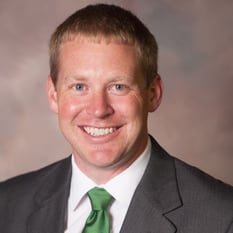
Michael Laukaitis
Director of Revenue Cycle Analytics, Accounting and Quality Assurance
Michael Laukaitis is a healthcare technology and revenue cycle leader with over 20 years of experience driving innovation at the intersection of analytics, automation, and operations. As Director of Revenue Cycle Technology & Intelligence at UT Southwestern Medical Center, he leads high-performing teams across analytics, quality assurance, training, and intelligent automation.Michael specializes in transforming complex revenue cycle challenges into scalable, data-drivensolutions, leveraging SQL, RPA, and agentic AI to improve financial performance and operationalefficiency. He has built and scaled teams from the ground up, developed enterprise-level automation programs, and is recognized nationally for advancing AI in healthcare revenue cycle management.A frequent speaker and collaborator, Michael is known for bridging technical expertise with business strategy, helping organizations move from reactive processes to proactive, intelligent operations
Let's talk!
Connect with a revenue cycle expert to discover a custom plan to amplify your revenue cycle with our transformative technology and services.