
https://youtu.be/E1Nsii6iQk4
GetixHealth Podcast
Turning Coding Needs into Coding Success with AI
 Alex Oey · June 26, 2026
Transcript — follow along with the video
- Shawn Gretz (0:11) Welcome to Revenue Cycle ReFramed, where GetixHealth interviews, Revenue Cycle leaders across the country. (0:18) Today, I'm excited to have with us Kelly Pearson. (0:21) Kelly comes from the Director of Coding and CDI for mercy health.(0:26) Welcome, kelly.
- Kelly Pierson(0:28) Thank you. (0:28) I'm excited to be here.
- Shawn Gretz (0:29) Well, Kelly, my first question I typically ask is this, is how did you get into healthcare?
- Kelly Pierson(0:36) Yeah. (0:37) Well, like many people who find themselves in the revenue cycle area, my path into coding wasn't something that I had purposely mapped out. (0:50) I started out in claims processing and honestly thought I would stay there long-term, but the company had relocated to downtown Chicago and the commute was far too long for me.
(1:06) So I transitioned part-time to a provider's office while I figured out what my next step would be. (1:14) During that time, the provider sold his practice to a health system, and I was offered a position in their coding department. (1:23) At the time, I had no idea what coding even was, but because I had experience in claims processing and provider billing, they had assured me that that would be a good fit for me.
(1:36) From there, my career really grew organically. (1:41) I eventually figured out what coding was, which really felt like learning a new language, but had the opportunity to work within different roles in the department, and it gave me really great exposure to all the areas within revenue cycle. (1:59) So I spent some time as a coder and then had a great opportunity to move back over to the payer side, where I supported claims editing and payment integrity processes.
(2:09) That experience gave me a completely different perspective on healthcare operations, and I found my time really valuable there. - Shawn Gretz(2:18) The dark side, yeah?
- Kelly Pierson(2:19) Yeah, absolutely. (2:22) It's not so dark when you're over there.
- Shawn Gretz (2:24) Oh.
- Kelly Pierson(2:27) Eventually, I had the opportunity to return back to Mercy Health as the coding and CDI director, and that's where I've spent the last four years, focusing on operational leadership and technology initiatives. (2:42) You know, I think having that experience on both sides, it definitely has given me a unique perspective to the life cycle of a claim, how it's documented and coded, and ultimately how it will be reviewed and reimbursed.
- Shawn Gretz(2:55) You know, interesting. (2:57) It's graduation season. (2:58) People are graduating from either college or high schools.(3:01) So if you look back at yourself when you were either that age of 18 or maybe coming out of college, and someone said, you know, 25 years, 30 years from now, you're going to be a coder, and that's what you're going to do. (3:14) What would you have said to yourself back then?
- Kelly Pierson(3:19) What is a coder? (3:22) But, you know, I knew I would be somewhere in business. (3:26) And so, you know, having the technical piece of coding and also the business processes, that really fits for me best.
- Shawn Gretz(3:34) Oh, fantastic. (3:36) So I think you're selling yourself just a little bit short of your career because what I've heard and had conversations with you about is about the capabilities that you brought to Mercy Health and AI coding. (3:49) And that's something I really want to dive into today because I think it's important to do.(3:52) So can you tell us a little bit more about what you what you've done with AI coding and the capabilities of autonomous coding at Mercy?
- Kelly Pierson(4:00) Yeah, yeah, definitely. (4:02) You know, when when I entered into my role, our team was really struggling with high demands in their work queues. (4:12) And the inability to make measurable improvements in the backlog.(4:20) You know, I was really fortunate that our VP of revenue cycle and our CEO had recognized fairly early on that we just couldn't hire enough experienced, certified coders to keep pace with our current charge volumes and even the future growth of the health system. (4:39) So we were looking to build a scalable coding model. (4:43) And that's where we started getting into AI.(4:46) And what what were the opportunities that were there for Mercy Health? (4:51) It was a little bit of a trailblazing because, you know, there weren't a lot of health systems up on AI and there wasn't a perfect roadmap. (5:01) But we knew it would positively impact our pre-AR days, improve our throughput and support staffing challenges.
- Shawn Gretz(5:11) You know, in a sense, you took a pain point, right, a point where you don't have enough coders and you couldn't find coders. (5:17) There's and especially in the 2020s during that time frame, there was there was not a lot of places to go search from. (5:24) And you look for an opportunity there.(5:26) And luckily for you, your leadership team was also in that forefront as well as thinking about it. (5:33) If you were in the shoes of someone else looking at at this saying, hey, this is my pain point as well. (5:39) How would you go about telling them how to start the process, start the initiation phase of, you know, maybe autonomous coding or coding is right for you?
- Kelly Pierson(5:51) Yeah, absolutely. (5:52) I think it's you have to take a look at what what's the problem you're trying to solve for. (6:00) Autonomous coding can be incredibly valuable, but organizations, they need to understand what their primary goal is.(6:09) You know, for for us, again, it was our pre-AR days and addressing those staffing challenges, which helped us define, you know, what what was our rollout strategy and what were we looking to accomplish? (6:21) You know, I also encourage leaders to have conversations with technology vendors early in the process because those discussions can help organizations better understand implementation timelines. (6:37) Who are the stakeholders involved?(6:39) You have to make sure you have every you know, all the right departments and areas involved so that you have a solid rollout. (6:46) And then also, you know, one of the most important things is making sure that you're ready. (6:51) And by ready to me means ensuring that you have strong documentation practices.(6:57) It's truly the foundation for a successful AI program. (7:02) Even the most advanced technology depends on clear, accurate documentation to ensure that they're making the right coding decisions.
- Shawn Gretz(7:10) I think a saying that goes along with that is junk in, junk out, correct? (7:15) And the capability of understanding is a documentation, correct? (7:18) How did you know that you were ready for that?
- Kelly Pierson(7:23) Yeah, you know, at the end of the day, the solution is only as good as the documentation. (7:30) And so we spent a lot of time analyzing our documentation up front, understanding how the autonomous vendor would interact with that documentation. (7:43) The solution can certainly accelerate workflows and improve efficiencies.(7:48) But we had to know that the documentation is accurate and it's complete. (7:54) And the, you know, having some of that pre-go live testing to ensure that we were getting consistent logic across the board was really important to us. (8:05) So we did some pre-live testing with our vendor.(8:08) We saw the importance of striking the right balance of documentation practices where, you know, if the documentation is lacking specificity, you're going to get downcoded, even though, you know, clinically it will support maybe a higher level. (8:24) And then you we also see it on the flip side where overly broad documentation or, you know, unnecessary documentation will cause upcoding and creates a risk there when it's misaligned with medical necessity.
- Shawn Gretz(8:41) Interesting. (8:41) You talked about before a little bit about project management, right? (8:44) The capability to understand what it is.(8:46) And before you even dive into a project like this, to really do kind of the initiation stage to understand, is it right for us? (8:54) And you also talked about subject matter experts or individuals across the organization. (8:59) Tell me, tell me, who did you have to have to help you really take this from that project management stage of initiation, selecting which vendor to use the second stages, you know, really defining what the project is?(9:12) How else did you have to engage in your organization to help you through the project management stages?
- Kelly Pierson(9:19) Yeah, that's a great question. (9:21) You know, I think engaging or having an accessible, a successful team, you need to have both operational and technical expertise. (9:31) It's important to have strong representation from coding, obviously.(9:36) But you also need your compliance team, revenue, integrity, IT and operational leaders on board, because everyone's bringing a different perspective to how the organization is going to interact with the technology. (9:48) I think having a dedicated project manager from a coding perspective is incredibly important. (9:57) Someone will help drive those timelines, ensuring that coding logic decisions are documented well and that they can manage the communication and ensure that both the internal team and the vendor is continuous, you know, continuously aligned.(10:13) In addition to that, I think it's extremely important to have physician and clinical champions that can play a major role in helping providers understand what's the initiative and how to build trust in that process.
- Shawn Gretz(10:28) Oh, that's a big one. (10:29) The clinical providers. (10:30) Tell me tell me more about that.
- (10:31) Tell us how did you how did you find those individuals that would make the the right partnership available for you and MercyHealth all together to make it work for for the organization?
- Kelly Pierson(10:42) Yeah, I think, you know, it was providers that we knew had quality documentation and they really understood coding practices. (10:51) So we we could interact with them on how was the tool reading their documentation? (10:57) Where were there some upcoding and downcoding that, you know, maybe wasn't just quite right and that, you know, we could have those open conversations with them on if we tweak the documentation here or do this, you know, how that would impact the AI.(11:13) It also is really important to talk about the clinical intent of the visit as well, because one or two words can shift that visit in in a direction that the clinician was not intending. (11:25) So it's important to have those conversations with the provider so they really, truly understand what their documentation or how their documentation is going to interact with the tool.
- Shawn Gretz(11:38) You know, Kelly, my vision is kind of kind of to the point where, in a sense, it's kind of like a football game where you run a play and that play was to get the clinicians involved to start realizing it. (11:50) How did you go backwards afterwards to be able to give back the feedback either to the physicians to be able to say, OK, this documentation is, you know, well, this is what the autonomous coding is picking up or this is what it's missing here. (12:02) How do we how do we correct this issue in order for the next time it comes back in the correct manner?(12:07) Tell me tell me a little bit more about looking back after the play happened and Monday morning quarterbacking what just occurred from the autonomous, you know, an autonomous agent and then going back and looking and saying, is this right? (12:17) Is this actually what it should have picked up in these documentation?
- Kelly Pierson(12:23) Yeah, so we have a layered audit process where, you know, we have our coders who are looking at the charges in real time, we have our auditors who are coming back on the back end, and then we also have a lot of data at our hands with the autonomous solution that shows us different provider trending and, you know, where where there may be some outliers or opportunity for physician education. (12:49) And I think in that trending report, that's where we can really start to drill down where a provider may have some issues. (12:57) You know, it gives us an idea.(12:59) Is a provider always going from, you know, a level three service to a level four or being downcoded the opposite way? (13:06) And the coders can take those specific examples and identify where there's gaps or, you know, issues and documentation. (13:16) And then they can have that very specific conversation with the provider of you're missing some criteria in prescription drug management.(13:24) Maybe you're not documenting your chronic conditions correctly. (13:27) Having that specific education and then being able to label the impact of what's happening on, you know, as their charges go through the automation. (13:38) It really gives them an idea of where, you know, where they can make those changes and make make big impact to their charging.
- Shawn Gretz(13:48) You know, it's interesting because most clinicians in most medical schools do not go through an environment to teach them coding. (13:56) So in a sense, this is also really probably broadening their scope and eyes as well, sometimes that they may not have seen because they can actually look at the data themselves. (14:05) How have you found that impactful for the physicians as well?
- Kelly Pierson(14:10) Yeah, you know, I think for Mercy, we're very lucky that our physicians do understand coding. (14:16) You know, they they all code their own clinic charges and, you know, and then coding will come through and validate and provide that education and whatnot. (14:25) So we're we're already a step ahead, I think, because they do have that coding knowledge.(14:31) Now it's getting into the finer details that maybe nobody has addressed before because they couldn't see it on a large scale of data. (14:41) So, you know, again, going back to that prescription drug management, really digging into those very specific criteria of one or two words can can make the provider, you know, miss out on that level four E&M because prescription drug management wasn't documented just so. (14:58) So it's a it's a great back and forth with our physicians, but, you know, it's just providing them a little bit more information to make sure that we're billing compliantly.
- Shawn Gretz(15:08) Well, that's fantastic. (15:10) Anything else that we should be taking away from not only the project itself, but overall the politics of installing something that's, you know, very new to the organization that never been installed before?
- Kelly Pierson(15:24) Yeah, I think, you know, thinking about metrics and, you know, what what type of or what areas you need to look at to ensure that the tool is, you know, being utilized to its fullest potential. (15:39) For me, the most meaningful measurements of the autonomous solution was, you know, monitoring coding accuracy through our quality audits, watching denial trends, documentation quality and that provider trending and all that data. (15:56) And then overall coding performance, you know, looking at DNFB coding days and pre-AR days.(16:03) I think it's also really important to track how much manual intervention is still required when exceptions or escalations are occurring. (16:14) Those trends help us identify opportunities for workflow improvement or coding logic refinement.
- Shawn Gretz(16:21) Let's talk about QA a little bit, because one of the things that go along with any autonomous or AI capabilities is making sure it's operating as intended, because everyone knows there's times when it goes off and speaks its own mind that really that's not what you really wanted to do. (16:38) So tell us tell us how you manage that QA process, because I'm sure there was one behind it and how you really took your your the coders that understood this, the benefit of actually installing something along these lines as well.
- Kelly Pierson(16:52) Yeah, you know, ensuring coding quality and compliance was one of our most important components of the rollout strategy. (17:02) We approached it with a layered audit model rather than, you know, just letting the AI run free and do its thing. (17:09) We we rolled out at, you know, at GoLive a hundred percent review of all of our providers and any new specialties.(17:17) You know, our team had to validate not only the accuracy but how is the tool functioning with the provider's documentation, ensuring that provider epic templates were appropriate and that they were being read accurately. (17:33) In addition to that, we also review a percent of charges that go through our quality review work queue. (17:40) And this allows the team to maintain ongoing oversight and monitor trends in real time.(17:47) And then as I spoke about, we also have the the provider review document where they can look at provider performance over the past month and identify areas for opportunity that way. (17:59) For our leadership team, it was never about removing oversight, you know, from a coder perspective, but instead creating a scalable process where we had strong governance and continuous monitor monitoring built into the daily workflows.
- Shawn Gretz(18:17) So, Kelly, any one of our listeners who would want to implement an autonomous coding program, what mistakes did you make that you would say, you know, if I were to do it again, this would be something I want to do or do over with? (18:29) Can you give us anything that, you know, you take away that you took from the installing this?
- Kelly Pierson(18:35) Yeah, absolutely. (18:37) You know, I think the first one that I already spoke about was having the dedicated coding project manager. (18:42) We, you know, about four months in, we determined that there there was a slight coding tweak we needed to make in the logic and trying to identify when when that decision was made, who made it.(18:56) You know, we were working backwards a bit and we realized that, you know, we're always going to have, you know, maybe a slight, you know, coding issue or, you know, a coding logic issue. (19:10) But we need to make sure that we're documenting our decisions and that the entire leadership team is approving those decisions so that we can move forward as a team. (19:21) So we we did implement the code, the dedicated coding project manager.(19:27) She also keeps us accountable for moving the project forward and ensuring that we're, you know, we're we're making the making decisions on time and aligned with the vendor. (19:38) The other one is getting the providers on board earlier. (19:43) I don't think that, you know, an organization can do it early enough.(19:47) Having having provider advocates on board to help promote the project, really get the providers to understand the why behind it and that that there are safeguards in place. (20:01) And we're there to not not only support the organization as a whole, but to keep the providers safe and compliant in their charging.
- Shawn Gretz(20:10) So you're an earlier adopter, I would say, in many instances in regards to autonomous coding three to five years from now. (20:17) If you if you say, you know, what is it going to look like? (20:20) Do you think in the health care space in regards to autonomous coding?
- Kelly Pierson(20:24) Yeah, I love this question because I've actually had a couple of conversations with people about this over the past few weeks and some of them outside of revenue cycle, believe it or not. (20:36) But I think, you know, autonomous coding will mature and expand. (20:43) But the the industry will also become more realistic about where automation works best and where human expertise is still essential.(20:53) You know, autonomous coding, it will be highly effective in high volume, low complexity cases. (21:01) But at the same time, organizations still need to rely on experienced coders to to review those high complexity areas, to provide that provider education and ultimately do AI governance. (21:15) So I think the role of the coding professional has to evolve instead of spending time on manual code assignments.(21:23) You know, we'll we'll see more focus on quality validations, data analytics and provider education. (21:31) The AI can't can't do that human decision making, especially in health care coding, because it's so nuanced. (21:39) But it it can improve efficiencies.(21:42) So the human expertise will help maintain that oversight and decision making.
- Shawn Gretz(21:49) So it's really leveling up those individuals that still are there to help the organization. (21:54) So really moving them to more complex or and or the the the emotional intelligence to have a conversation with the provider, to help them get to a place that needed for the organization as well. (22:06) Is that is that a fair statement from that perspective?(22:08) Absolutely. (22:09) Yeah, fantastic. (22:10) All right.(22:10) So now someone that's looking to do this, what advice would you give to them that is brand new? (22:16) Maybe a lager to installing autonomous coding. (22:19) What advice would you give to them today in how to not only prepare potentially their leadership team, but also the second part is to prepare their organization for an install of a program like this?
- Kelly Pierson(22:33) Yeah, I think it goes back to identifying what is the the primary issue that you're trying to solve for. (22:40) How is autonomous coding going to help your organization? (22:44) You know, you have to have executive buy in.(22:47) And so, you know, what what is that problem? (22:50) How how will autonomous coding fix that? (22:52) And how will you scale that up and make it a foundational implementation for for your organization?(23:01) You know. (23:03) It really it's it's important to get the, you know, cross-functional team together and ensure that people are looking at it from different perspectives. (23:15) I think, you know, along the way, you try to you try to assess what what's the impact?(23:23) What what are some of the long term issues that we're going to encounter? (23:27) But you can't possibly you can't possibly think of everything. (23:31) So trying to get that cross-functional team together and identify issues along the way so that you can be proactive rather than reactive.
- Shawn Gretz(23:40) Well, Kelly, I truly appreciate our time together today and talking about autonomous coding. (23:45) If there's one piece of advice you want to leave the audience with today before we end, what would it be on autonomous coding?
- Kelly Pierson(23:55) Oh, you know, I think it goes back to being ready and having strong documentation practices. (24:03) That really is the the foundation of the entire solution. (24:08) So, you know, assessing where your documentation is today, making sure that your providers understand their levels of service and the importance of, you know, specificity and documentation.(24:22) All of that will make the the solution or the implementation process run much more smoothly.
- Shawn Gretz(24:29) Oh, perfect. (24:30) Well, thank you for joining us. (24:31) We really appreciate you taking the time.(24:34) We're excited to share this with our audience. (24:36) And we hope you guys all have a fantastic day, everyone. (24:40) Take care.(24:40) Great.
- Kelly Pierson(24:41) Thank you so much. (24:42) Bye. (24:42) Bye.
Executive summary
In this in-depth discussion about autonomous coding and artificial intelligence, Kelly Pierson, Director of Coding and CDI at MercyHealth, and host Shawn Gretz, President, Sales and Marketing for GetixHealth, talked about her experience leading an organization through the move to autonomous coding and the impact of AI. She highlights the process, including how to be prepared, what to do during the process, and things to keep in mind during go-live and beyond. Kelly also emphasizes the importance of documentation, cross-functional teams, and recognizing potential pitfalls when moving towards autonomous coding. They also discuss the future of autonomous coding in revenue cycle and the impact it can have.
Key takeaways
- The importance of proper documentation, leadership buy-in, and strong cross-functional teams
- Utilizing a project manager to ensure a smooth and successful transition
- The future of autonomous coding in healthcare
Where to next?
Answer
What does 'right seat, right person' mean in revenue cycle leadership?
Answer
What Is Revenue Integrity in Healthcare?
Podcast Episode
Building Payer Relationships, Aligning Teams, and Preparing for Cybersecurity Threats
Podcast Episode
Insights from a Revenue Cycle VP: Establishing Operations at a New Organization
Article
How Healthcare Leaders Are Preparing for Tomorrow
Article
Tackling Administrative Burdens in Healthcare Revenue Cycle Management
Meet The Speakers
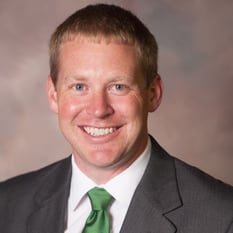
-1.png?width=233&height=237&name=a57ed3ca-163e-4f0c-9c99-0c40959fbaa5%20(1)-1.png)
Kelly Pierson
Director of Coding and Clinical Documentation Integrity
Kelly Pierson is the Director of Coding and Clinical Documentation Integrity (CDI) with over 20 years of experience in Coding, CDI, and Compliance. She leads strategic initiatives focused on autonomous coding, AI enabled workflows, and revenue optimization, brining a balanced provider and payer perspective to drive performance and innovation.

Let's talk!
Connect with a revenue cycle expert to discover a custom plan to amplify your revenue cycle with our transformative technology and services.