
GetixHealth Podcast
Medicaid Policy Shifts and What They Mean
 Alex Oey · August 21, 2026
Transcript — follow along with the video
-
Rebecca Haro Kuo(0:07) I am the host, Rebecca Haro Kuo, I'm the Director of Operations for GetixHealth Eligibility Services and our guest today is Jennifer Wagner, Director of Medicaid Eligibility and Enrollment Center on Budget and Policy Priorities. (0:27) welcome jennifer.
-
Jennifer Wagner(0:29) Thanks for having me.
-
Rebecca Haro Kuo(0:29) And tell us a little bit about yourself and your background.
-
Jennifer Wagner(0:33) I started my career as a food stamp caseworker, had the opportunity to go to law school and be a state advocate, and then oversaw policy and operations for Illinois Department of Human Services for about five years before coming to CBPP 10 years ago. (0:46) And here I really focus on the on the ground eligibility enrollment process. (0:50) So the policy operations technology that affect how somebody gets access to benefits and whether they're able to maintain those benefits.
-
Rebecca Haro Kuo(0:58) That's wonderful. (0:58) I love that you have that from the start background and you know how it works from the beginning to the end and everything behind it. (1:07) Well, welcome. (1:08) We're going to go ahead and start with some questions about Medicaid eligibility and political influences. (1:15) So Medicaid rules often shift due to political pressures as much as policy goals. (1:21) And how do you see politics influencing the direction of Medicaid eligibility?
-
Jennifer Wagner(1:27) So that's a loaded question, especially in today's environment. (1:31) Traditionally, who is eligible is often political. (1:35) So when you look at expansion, when you look at income limits, that is highly politicized. (1:40) But then the how it's done, the kind of nitty gritty part of the process can often fall below the radar. (1:47) And that can be good or bad, right? (1:49) Sometimes we've been able to make good changes to the on the ground processes, thinking about verifications and ex parte renewals and things like that.(1:58) At least it's kind of less controlled by politics and states. (2:03) But now things are changing a little bit. (2:05) We are seeing the politics get into different layers of the eligibility process. (2:10) Of course, one of the biggest threats right now is work requirements. (2:14) And that could come from Congress. (2:15) That is coming from state legislatures in some places.(2:19) And that would have a huge impact on how people actually enroll and if they're able to stay enrolled. (2:25) Sometimes these details are controlled by the administration. (2:29) We saw a great example during unwinding as they were able to give a lot of supports to states and make changes. (2:35) We're not sure yet what this administration is going to do on some of the kind of on the ground detailed things that are traditionally under the radar. (2:43) But we're in such a different environment right now. (2:44) It's kind of hard to predict.
-
Rebecca Haro Kuo(2:46) Absolutely. (2:47) And we did see some of that work requirements the last time this administration was. (2:54) Exactly. (2:54) Yeah. (2:55) OK. (2:56) And so if some of these proposals, there's some proposals to roll back expansions or impose more frequent redeterminations moving forward.(3:07) So do you foresee a coverage crisis in particular states or regions and which areas are at greater risk?
-
Jennifer Wagner(3:15) So it all depends on the details of the proposal and each one could affect states in different ways. (3:19) So starting with the possibility of rolling back expansion, most likely possibility there being reducing the FMAP for the expansion populations. (3:28) There are a number of states, I believe it's 11 or 12, that have trigger laws. (3:32) In state statute, it says if the match drops below 90 percent, expansion is automatically undone. (3:38) So those states will clearly be disproportionately affected if the rollback is done that way. (3:44) Then you have ballot states like Oklahoma, where expansion is essentially in the state's constitution because of the ballot initiative.(3:52) So in those situations, even if the federal government reduces the FMAP or greatly reduces the funding flowing to the states, the states are kind of going to be in a bind because they're required to cover the expansion population. (4:05) And then you have overall the effect on state budgets. (4:08) So states that may be doing better fiscally would be able to make up for some of the cuts coming from Congress and others that have deficits or are struggling or are eager to decrease their spending on Medicaid might just roll back as much as they're legally allowed to if the feds cut the funding.(4:27) When we look at something like more frequent renewals, you know, one of the more on the ground changes that can affect access, the key there is to really look at who did well during unwinding. (4:36) Obviously, the focus of unwinding was renewing coverage. (4:39) And we saw some states that did a great job.(4:41) They really focused on their ex parte or their automatic renewal rate using data sources and kept lots of people enrolled. (4:48) There are others that struggled a lot, that had low rates, that had confusing notices, lots of calls to the call center and things like that that greatly affected them. (4:58) And then you're going to also have to look at states with workload issues. (5:01) Even now that unwinding is done, states are struggling to keep up with application and renewal demand. (5:07) You've got states that are integrated with SNAP that are trying to balance all of those different pressures. (5:12) So if you take something like renewals that they're struggling with already and you say do it twice as often, that's going to have a huge impact on their application processing, on their customer service, because it's unlikely that the state will say, OK, well, we're going to up your caseworker number by 30 percent or whatever it might be to accommodate that. (5:30) So there are all kinds of different factors that could influence how states fare with big changes like that.
-
Rebecca Haro Kuo(5:35) Absolutely. (5:36) And I would imagine that some of the areas that would be experiencing a disproportionate impact would be maybe rural areas or places where access to health care is already limited. (5:49) absolutely (5:50) And so creating more, more issues and problems for these populations. (5:57) What are some of the states or who are some of the states that have done a particularly good job during the renewals? (6:04) Yeah, yeah.
-
Jennifer Wagner (6:07) I mean, let's see, a lot of states, I think it's up to like 20, I think it's 30 states that are over 50 percent on their ex parte rate, which is fantastic. (6:16) So we've seen tons of improvement there. (6:19) Some states had bigger struggles where they were excluding entire populations from their ex parte. (6:24) And so they had to do some more fundamental changes to their system to achieve that, to achieve that increase. (6:31) But we saw huge increases in California and other places where the United States Digital Services worked with states. (6:38) We saw some states that made a lot of strides on particular populations.(6:42) For example, we partnered with Code for America to support Minnesota. (6:46) They have their non-magi, their seniors and people with disabilities in a totally different eligibility system and weren't doing ex parte at all for them. (6:54) So worked with them to actually do a manual process that significantly reduced case worker time and got their rate up pretty high, meaning that seniors and people with disabilities didn't have to fill out forms and send them back. (7:07) So there's a wide variety of progress and success made across the country during unwinding.
-
Rebecca Haro Kuo(7:12) I do remember seeing the pink envelopes and the pink, the forms that you couldn't miss them when they were coming through. (7:19) And there were quite a quite a bit of those here in California that we were seeing coming through.
-
Jennifer Wagner(7:23) Yeah, that's great. (7:24) Lots of innovative approaches that really hadn't been tested in Medicaid before from outreach to little things like pink envelopes that made a big difference.
-
Rebecca Haro Kuo(7:32) Yeah. (7:32) And I remember just driving down the highway and seeing like throughout California giant billboards throughout like up and down the five freeway, you know, yeah, into Southern.
-
Jennifer Wagner(7:42) Right. (7:42) Like bus wraps in Louisiana and really, really cool practices.
-
Rebecca Haro Kuo(7:46) Yeah, that was great to see. (7:49) So let's let's talk about. (7:53) Kind of like the impact of what that would look like, you touched on a little little bit about the impact of having more frequent Medicaid renewals. (8:02) There's some proposals to require this. (8:05) And what would that look like for the agencies, the providers and the beneficiaries?
-
Jennifer Wagner(8:11) I mean, in a word, devastating. (8:13) We saw what it meant during unwinding, even with those annual renewals. (8:17) That was complicated because most people hadn't been touched for a couple of years. (8:21) So there are challenges in locating them, in updating their information and things like that. (8:25) We made it through that kind of big hump and workload, but still states are struggling to manage right now and they haven't perfected their notices and communications and things like that. (8:36) So the bottom line is that there's going to be a really high risk of eligible people losing coverage. (8:41) We see that happen annually. (8:42) It happens biannually. (8:43) That's essentially twice the risk of eligible people not getting a form, not understanding it, not sending in a timely estate agency, but being unable to process it timely. (8:54) And we know that most people are still eligible after a year. (8:58) There's a study that just came out that showed I think it's close to 90 percent of people are still eligible after one year, a higher rate for kids. (9:06) And so if we know that after one year, why would we do it?(9:10) Why would we be doing it every six months? (9:12) The bottom line is what you're achieving is kicking eligible people off. (9:16) And as I mentioned earlier, the workload, I worry so much having been a caseworker, having been a state administrator, people are barely getting by.(9:23) States are barely keeping up with the demand. (9:25) And in some cases they're not. (9:27) The number of applications that are processed past the 45 day deadline, the call center wait times, things like that.(9:33) This added workload is going to be really, really difficult. (9:36) And then it has a snowball effect, right? (9:38) If you don't process a piece of paper timely, then somebody is calling to check on it or coming into an office and you have to deal with them and touch the case multiple times.
(9:47) Whereas if you stay on top of it and get it done right away, you don't have all those subsequent follow ups. (9:52) So seeing things like this done every six months will just really increase people losing losing coverage, even though they remain eligible.
-
Rebecca Haro Kuo(9:59) I completely agree with you. (10:01) We are seeing this in the hospitals. (10:03) We are you know, our our employees are having long wait times and experiencing all the things that you described and feeling the pressures of the hospital administration and their pressures to do timely discharge planning and and follow up care and not having that eligibility in place is a huge barrier for them.(10:30) So it could be devastating, as you said, definitely. (10:36) So there's a couple of things that you touched on, but can you think of something that was really unconventional that any of the states did that might be model for others if only they had the political or the financial will? (10:50) Like what what could a state do to be genuinely bold or unconventional in recreating or fixing the eligibility process?
-
Jennifer Wagner(10:59) Bold and unconventional means something different in our world compared to the broader world, right? (11:04) It's just now that states are texting regularly and that was kind of seen as bold and unconventional, unconventional. (11:11) Some of the techniques we just talked about during unwinding from pink envelopes to billboards and advertisements and things like that were really unconventional. (11:20) So I'd like to see more of that. (11:23) I'd like to see more kind of catching up to the modern times in some of the operations. (11:28) And that could be, again, simple of like reminder calls, whether they're robo or in person when people have renewals due, advances in texting from reminder to two way texting.(11:40) Right now, there's a lot of activity and opportunity around income verification. (11:44) Right. (11:45) Kind of boring, but really, really critical to the eligibility determination process.(11:49) And there have been advances in using quarterly wage data and using Equifax, the work number to verify income if states are applying reasonable compatibility well and they can really minimize the number of requests for information that goes out. (12:03) However, the self-employed are often left behind in that. (12:06) And as gig workers increase, as more people have a different kind of mix of income, we really need to pay more attention to that population and streamline their ability to document their income and expenses, but also make it easier for the eligibility workers to process that.(12:22) We don't want to see people coming in with the shoeboxes full of receipts to be processed and taking the time to go through that. (12:29) So there are some newer emerging services that allow applicants to kind of connect to (12:34) their gig platform and in some cases, their bank accounts and more easily in a streamlined (12:39) way, document their income and expenses and using technology, not AI or anything super (12:45) crazy, but some basic technology to better document that and average it over time and (12:51) ideally present it into a nice package to the caseworker.(12:55) So the individual is able to verify that this is accurate, ideally weaving in some of the rules of what's countable as an expense, what isn't, and giving it to the caseworker in a way that that's a clean report for them to process it. (13:10) So I think there's more work to be done on that income verification piece, especially for the self-employed to streamline it and make it easier for them as well.
-
Rebecca Haro Kuo(13:19) That's absolutely true. (13:21) I know that we currently use affidavits to try and provide that kind of information, but it's not always accepted or it's challenging. (13:30) You know, it's not it's not always the best form for proof, but having those platforms or there's that technology that would allow them to provide that information would be great and be able to integrate that with eligibility (13:45) Absolutely. (13:47) All right. (13:48) So sometimes well-intentioned policies can lead to bureaucratic nightmares in practice.(13:55) Have you observed any well-intentioned changes to the Medicaid enrollment that ended up backfiring or creating new barriers?
-
Jennifer Wagner(14:04) We see that most commonly with technology, right? (14:07) We see states brushing out deployment of a new online portal, of a way to submit documents or of an entire back-end eligibility enrollment system. (14:17) And these are well-intended changes, right? (14:19) They're trying to make it easier for clients. (14:21) They're trying to make it more streamlined for eligibility workers to process things. (14:26) But unfortunately, there's often not enough good user-centered design up front.(14:31) There's not enough elaborate testing to make sure that these products are working well before they're rolled out. (14:37) And then you end up with states kind of at a standstill if the fundamental E&E system isn't working for them. (14:43) Or you end up with major barriers where people are trying to submit supporting documents, but it's not reaching the worker, where the online system is inaccessible. (14:52) And then you end up with overrun call centers or things like that. (14:56) So that's mostly the kind of danger zone where states are trying to do good things and modernize. (15:02) But because the steps in the process aren't done as well as they should be, there's bad things on the back end.(15:07) And rather than fixing things before there's rollout, it's putting the pieces together. (15:12) It's trying to fix it on the back end, create workarounds, have periods where certain functions are unavailable. (15:21) And that just generates these backlogs, bad customer service and all of those challenges.
-
Rebecca Haro Kuo(15:26) Absolutely. (15:28) We talk about these online systems and automated verifications, but what about those people who can't navigate these tools? (15:36) And how are we unintentionally leaving behind some of these populations? (15:41) And really some of those that are at greatest risk?
-
Jennifer Wagner(15:45) Yeah, we always need these paths to be additional paths, right? (15:49) Not exclusive paths. (15:50) We don't want to be taking away other paths for folks. (15:54) So I think it's OK to de-emphasize in-person service, right? (15:58) We were on a path towards that to begin with. (16:00) And then COVID really accelerated that.(16:03) We don't want to eliminate it. (16:04) I know in some states it's nearly impossible to actually go into an office and talk to somebody. (16:09) That is important to maintain as a fail safe.(16:13) For those who need to see somebody in person, for those who can't use other paths, there should be a way for them to go in and see somebody face to face. (16:20) But at the same time, that shouldn't be required. (16:23) So online pathways are great. (16:25) People are becoming more and more sophisticated and able to use them, assuming we're not putting barriers in front of it, like complex identity verification or something like that that make it hard to use. (16:35) But we should make sure we also have robust telephonic service available to people. (16:40) The majority of people are able to use a phone service and call into a call center. (16:45) But it has to function well. (16:47) It has to be accessible. (16:49) And that means it has to be low wait times, has to have multiple languages. (16:54) You have to be able to type in your case number before it times out and cuts you off and things like that. (17:01) And it also has to be staffed with a person who can address your issue. (17:04) Right. (17:05) We have more information on wait times than we ever did before, which is wonderful and informative. (17:11) My concern, though, is sometimes if wait times are the sole measure of a call center's customer service, things get distorted. (17:18) So you could have somebody answer the call right away and route your call, but then you're on hold for 45 minutes to talk to somebody. (17:26) Or you could have your call answered quickly, but it's somebody who can't actually help you. (17:30) So they take down your information and your need and it goes into a black hole and you never hear back. (17:36) So I think most people would agree that they'd be willing to wait on hold 20, 25, 30 minutes if they reach somebody who's actually able to resolve their issue, address it right there, and they don't have to call back. (17:50) But sometimes we do see that there's kind of distorted incentives there and people aren't able to get service. (17:56) And that is really disempowering. (17:58) I've worked with clients and worked in states where I've tested the call center myself. (18:03) And when you hear, sorry, all lines are busy, call back another time and you get hung up on, that is amazingly disempowering. (18:11) And I'm not even the one trying to feed my family or get medical care for my kids. (18:16) And so we have to make sure that that's not happening and that all of these pathways are open for people. (18:21) And we've got to align incentives as well between application assisters and clients and states. (18:28) If the online portal is the most efficient method, for example, in most states, the information from an online application feeds directly into the back end system. (18:38) So that's preferred for the state.(18:40) Well, is it user friendly? (18:42) Is there an assister portal to expedite folks in hospitals, in CBOs who are helping people? (18:48) Is it accessible for individuals to use without, again, aggressive identity verification processes that make it so they can't even log in to start an application?(18:58) So we've got to really streamline all of those different avenues and make them available to people to meet their needs and meet them where they are.
-
Rebecca Haro Kuo(19:05) Most definitely. (19:06) And we would like to see some of those assister accessibility things addressed because we are seeing the multiple hours on hold and getting finally getting a call and answered and then being hung up on. (19:21) So those are the frustrations that we deal with on a daily basis. (19:26) And I know that there have been changes to the portal, but some of those changes have come at a cost for our access as community assisters. (19:34) And so it makes it a little bit more difficult for us to to help our population as well. (19:41) So we are feeling all of those challenges.(19:45) All right. (19:45) Let's talk about federal and versus state collaboration and conflicts. (19:50) What role can federal policy and partnerships with state agencies or advocacy groups play in streamlining or reducing this complexity that we're talking about?
-
Jennifer Wagner(20:03) There are many opportunities. (20:05) I mean, again, I would go back to unwinding because that was just such an amazing example of collaboration in a very difficult time that led to led to progress. (20:13) Right. (20:13) There's still a lot of bumps in the road. (20:15) But there we saw CMS provide a lot of clarity on requirements. (20:19) Right.(20:19) The regs say what the regs say, but sometimes that's not always applicable to a state situation or clear in how it applies to a state situation. (20:28) So we saw clarity on that, along with detailed guidance of this is what it means. (20:32) This is what you have to do.(20:34) And then they were also very responsive with waivers, you know, opened up with a number of waivers based on state conversations, but kept expanding the number of waivers that were available to states to really streamline renewals during unwinding. (20:47) And then they went a step further in a way we've never seen before with actual on the ground technical assistance. (20:53) So U.S. digital services and other folks went out and sat side by side with the state to wrestle with the issues, how they actually apply it in that state specific situation to negotiate with the IT vendors and make things happen quickly. (21:06) And we saw those rapid increases in ex parte rates as a result of that tremendous effort. (21:12) And from what I heard, state agencies really felt heard and understood. (21:16) They appreciated that there was some some grace and recognition that, yes, this is a requirement that's been on the book for 10 years, but we're not there.(21:24) So what do we have to do to get there? (21:25) Let's not, you know, try to go back in a time machine and fix that, but deal with the current situation and make make improvements. (21:33) And so they really appreciated that partnership with the feds.(21:37) The feds also really partnered with advocacy groups. (21:40) They took the feedback and they followed up on the issues. (21:42) They recognized that the state might be saying something is functioning in one way, but not really understand what's happening on the ground and how it's impacting clients.(21:52) And so there was a lot of feedback from advocates and caused a lot of consistent issues to emerge across states. (21:59) And then CMS took those learnings and turned that into more guidance and more TA. (22:03) It was really an iterative process that was building towards an improved renewal process.(22:08) Everyone knew the work should have been done years ago, but it wasn't. (22:11) Everyone knew the work wouldn't be fully completed by the end of unwinding, but set things off on a trajectory to ultimately get to compliance and a more efficient process. (22:22) We're definitely in a different place right now.(22:25) You know, Congress is looking to make cuts to the program or shift costs to the state. (22:30) So the state has to make cuts to the program to get by. (22:34) And unfortunately, a lot of that is focused on numbers and not people.(22:38) So they're striving towards that $880 billion target or whatever it ends up being and not really looking at how it affects people. (22:46) And they're not actually trying to find efficiencies, ways to lower health care costs. (22:51) They're just looking to shift those costs. (22:54) And, you know, as I mentioned earlier, it's a little unclear what HHS's position is going to be on some of these things. (23:00) We're watching 1115 waivers, whether it's ones that have been pending with CMS for a while or newer ones around work requirements. (23:08) We're not sure how CMS is going to respond to that. (23:11) We're not sure if they're going to prioritize IT systems. (23:15) Right. (23:15) Part of the apparent prioritization of DOJ is like efficiency and looking at technology. (23:21) There's a lot of room for improvement there. (23:23) So could there be changes to that or could there be decreases in funding? (23:28) The enhanced match for IT systems, if that goes away, that would have a huge impact on state's abilities to serve their clients. (23:35) And then we don't know yet if the feds will get into the detailed guidance. (23:40) Right. (23:40) Are they going to rescind things the prior administration did? (23:43) Are they going to, you know, get into the nitty gritty on things around applications or renewals and move things further towards access and efficiency or roll things back and create more barriers to coverage? (23:56) As I mentioned earlier, the looming issue is work requirements. (24:00) Right.(24:00) We know that's happening in multiple ways and it's coming up in a lot of states. (24:04) Right. (24:05) Either the state administration is looking to propose a waiver or in some cases, the state legislature is requiring that.(24:12) Now, I have never met an actual program administrator of any political background who's excited about work requirements. (24:19) Right. (24:20) Most people recognize that it's a tremendous addition of work. (24:23) It's more complexity. (24:25) It's IT changes that have to jump, you know, other issues that have been waiting for years to be addressed. (24:30) And so it's interesting to see how that's all playing out. (24:33) We're seeing places where a state law has passed, but the administrators are really trying to make it work and minimize harm and try to kind of fit within those broad parameters in the law, but make it as least harmful as possible. (24:48) And then if the feds pass something, we would see challenges in blue states that don't want to do this at all and how they could do it again within the confines of the law, but to minimize harm, especially for eligible people. (25:00) And if you pair that all with cuts or reductions in funding, it's going to be really challenging on the ground.
-
Rebecca Haro Kuo(25:07) Most definitely challenging. (25:10) Talk to me a little bit about how those work programs theoretically would work or how we've seen them work in the past. (25:16) What were those requirements or what are those potential requirements looking like? (25:20) And what what would the states have to impose on these individuals?
-
Jennifer Wagner(25:25) There's a huge variety of designs, whether you look at past federal legislation or state level waivers that have been proposed or are being proposed right now. (25:33) Some only affect the expansion population, so they exempt anybody with children in the home. (25:39) Some include parents unless they're caretakers of, say, children under six. (25:44) Some exempt you if you're caring for a disabled family member or a student or homeless or a veteran. (25:50) There are all kinds of different iterations of who the requirement is applicable to and who's exempt. (25:56) And then you look at what the actual requirement is. (25:59) We've seen 20 hours of work per week or averaged out to 80 hours a month. (26:04) We've seen any earned income by somebody in the household. (26:08) Sometimes this needs to be proven monthly, like we saw in Arkansas a few years ago. (26:13) Sometimes it's only applicable at renewal. (26:16) Georgia, their current waiver is a upfront requirement that when you apply, you have to demonstrate compliance in order to actually get on, whereas others require that the verification further down the road. (26:29) Some say if you go three months without meeting the requirement, you lose coverage. (26:33) Others, again, are only verifying at a renewal point. (26:37) And then what activities count as compliance? (26:39) Obviously, employment's in there, but does volunteer work or job search or school or treatment programs? (26:48) Ideally, if somebody is also receiving unemployment benefits or SNAP or TANF, there's an assumption that you're complying with that program's work requirements and therefore you're exempt from the Medicaid requirements. (27:00) So there's tons of different variations in design, and it depends where the work requirements are coming from as far as how detailed they're going to be. (27:08) So if Congress passes something, are they just going to set out the requirements at a high level and grant states flexibility to meet them? (27:15) Or are they going to be very prescriptive? (27:18) Similarly with state laws, we're seeing a variety of specificity coming out of them. (27:23) And then how much flexibility do the actual state agencies have to find a way to make it work? (27:29) So we know that they're harmful. (27:31) We know work requirements don't work. (27:32) They don't increase employment. (27:34) They do lead to eligible people losing coverage. (27:37) We know that much. (27:38) But right now we're waiting to see the specifics and if that is something that's going to come out of congress.
-
Rebecca Haro Kuo(27:44) Frightening times ahead, for sure, because all of those things that you mentioned are a recipe for these individuals losing their eligibility, losing their benefits across the board. (27:57) So I'm not looking forward to that. (28:02) But looking ahead and in your opinion, are there any or in your that you've seen, are there any upcoming legislative or regulatory changes that hospitals and revenue cycle management professionals should prepare for, especially those that might affect Medicaid budgets or the enrollment rules?
-
Jennifer Wagner(28:26) Absolutely. (28:27) I think there are going to be some. (28:28) We just don't know what they are yet. (28:30) So number one is those cost shifts to states, right, by reducing the AFMAP or otherwise changing the formula, whether it's through block grant, per capita caps, whatever it might be, that's going to shift cost to states and most states won't be able to make up for that decrease in federal revenue. (28:46) And that's going to lead to a change in what population is eligible, what services are covered, how eligibility determinations are performed, you know, anything they might have to do to make up for that revenue loss. (28:58) We could see the specific eligibility changes. (29:01) Again, that could be at the federal level, although it does seem like they're more pushing those decisions to the state. (29:08) So we could see expansion states effectively unexpand, decreases in eligibility thresholds, things like that. (29:15) We touched on work requirements.(29:17) Those could be mandated from the federal level and states might have to implement those, which would lead to both bureaucratic and administrative burden, but also coverage loss for a lot of people. (29:28) What's interesting there is that by states own estimates, there are very few people who are not working but could work, you know, that don't fit any of those exemptions. (29:37) Yet this would apply to the whole population. (29:40) And as good as some of our data sources are, they're not perfect. (29:43) And like people who are exempt or are compliant are going to get caught up in the shuffle and lose coverage, unfortunately. (29:51) And then there's the more nuanced changes, the more on the ground changes that can have a huge impact.
(29:56) Like as we discussed, the renewals becoming more frequent or something like that, that could, again, lead eligible people to lose coverage, as well as really create a lot of administrative sludge in the system that delays application processing, call centers, other things. (30:11) We could also see the repeal of rules that were passed that were finalized under the prior administration. (30:18) So there were the two eligibility enrollment final rules that primarily affected kids and seniors and people with disabilities and didn't expand eligibility for the programs, but really tried to streamline eligibility and make it simpler for people to access the program, make it easier for states to determine eligibility for these populations. (30:37) And even though it didn't expand eligibility, it would make more eligible people enrolled. (30:43) So there was a substantial cost to the rule. (30:46) And right now, Congress has some eyes on that as far as if they repeal that, could that be savings that would go into their reconciliation package and offset a small portion of the tax cuts that they're giving primarily to the wealthy population? (31:01) So that could have an impact as well and be kind of tricky because states are presumably partway through implementation, different parts of the rule had different effective dates, but states are working on that. (31:12) And so would they reverse those changes or continue with them because many of them were optional before, now are mandatory? (31:19) So there could be all kinds of downstream effects. (31:21) We just we don't know what they will be yet.
-
Rebecca Haro Kuo(31:25) About some practical advice for revenue cycle management professionals and providers. (31:30) So for those that are for the revenue cycle managers seeking to improve their patient enrollment outcomes, what practical strategies or resources would you recommend to help them stay informed and prepared and adaptable to these ongoing changes?
-
Jennifer Wagner(31:46) I would say follow the updates that are coming out of the federal level from Congress, whether it's just through the regular news or subscribing to newsletters of, you know, consultant organizations or advocacy organizations. (31:59) We're all sending out updates regularly. (32:02) It's hard because sometimes you don't want to get caught up in the what ifs (32:05) It's like, OK, tell me what actually passed and then I'll figure out how to implement it. (32:09) But it is good to have some eye on what's happening, the proposals, the possibilities that are being floated so you can kind of be ready for what ultimately might pass. (32:19) And then wherever possible, work really closely with the state.(32:23) They are going to be facing choices. (32:25) They're going to be facing implementation choices and they really need your perspective. (32:29) You're seeing how these things play out on the ground. (32:32) Ideally, you could look to other states that have done similar things and say, oh, watch out for this. (32:37) This will make it worse. (32:38) Do this instead and have those conversations and just really bring your perspective because implementation, the delivery part of this is so important, as we've seen through all parts of Medicaid, how the state actually decides to administrate is key. (32:53) And so if there are substantial changes to the program, the choices within that implementation are going to be critical. (32:59) And you can both understand what they're thinking is and what's coming your way, but ideally influence it as well. (33:06) And then to partner with advocates on the ground. (33:09) You know, there are many other application assisters, whether they're at food banks or CBOs or other places on the ground that are also interested in this and representing clients that are going to be seeking assistance and renewing their coverage and things. (33:22) And so you will likely have a lot of different aligned interests. (33:25) And then wherever possible, push for changes, push for things that impact people. (33:31) Sometimes you might need to do a little good cop, bad cop and what the advocates push versus what you push.(33:37) You know, you are often part of a larger system that can say certain things and not say certain things, but to just really focus on that on the ground impact and make sure that they hear you and implement it in the best way possible to minimize the harm.
-
Rebecca Haro Kuo(33:52) That's great advice, absolutely. (33:54) And if you, Jennifer, could wave a magic wand and instantly overhaul any one part of the eligibility and enrollment system, where would you focus for the biggest impact?
-
Jennifer Wagner(34:06) Just one. (34:07) I would really look at the eligibility and enrollment systems, the technology underlying these programs. (34:14) They're very expensive, but they're not user friendly and they really don't work as well as they should, especially considering the time and effort and money that went into designing them. (34:26) You all see it on the front end, the public facing end, when it doesn't meet your clients needs. (34:31) But also it really affects the eligibility workers. (34:34) The number of clicks to do a simple function, the number of screens that folks have to go through is sometimes just overwhelming and wastes a lot of time.
(34:44) Right. (34:45) We know eligibility workers aren't necessarily going to be social workers of the past to know everything about a household, but they should be able to process things without wasting their time on kind of sludge within the system. (34:58) And they're also very hard to change. (35:00) We saw that during the unwinding. (35:01) There were waivers and other opportunities that were offered and states were interested, but there was no way that they could actually change the system by the time the waivers would go away. (35:11) And so as we're seeing innovative practices, as we're seeing additional options or things that other states are doing to improve systems, some states are being left behind because they already have a year, a two year runway of changes that need to be made. (35:26) So I know there are a lot of different players involved in this. (35:29) There are various vendors that are trying to improve things. (35:32) And it is a large and complicated network of different systems that have to interact within Medicaid. (35:39) But that is definitely where I would use my magic wand to improve those and make it better for everybody, especially the eligibility workers that are trying to kind of slug through all this.
-
Rebecca Haro Kuo(35:49) Absolutely. (35:50) They are. (35:50) They are. (35:52) They should have a magic wand as well.
-
Jennifer Wagner(35:54) I would give them mine if I could.
-
Rebecca Haro Kuo(35:56) Well, I want to thank you, Jennifer, for spending time with us today and giving us your valuable insights and. (36:06) Providing us with resources and information about how to approach these challenging times that we are currently facing. (36:13) So thank you, Jennifer. (36:14) Any last thoughts that you would like to leave us with?
-
Jennifer Wagner36:17) Thank you all for having me and thank you for the important work that you do on the ground.
-
Rebecca Haro Kuo(36:21) Thanks again.
Executive summary
Explore Medicaid enrollment challenges, policy impacts, and innovative solutions with Jennifer Wagner, Director of Medicaid Eligibility and Enrollment at the Center on Budget and Policy Priorities.
Key takeaways
- Risks and consequences of proposed work requirements and more frequent redeterminations
- Lessons learned from the COVID-19 unwinding period and its impact on Medicaid systems
- The importance of preserving multiple access paths (online, in-person, telephonic) for applicants
- Collaboration between federal agencies, state governments, and community advocates
- Practical advice for revenue cycle leaders on staying informed and influencing policy implementation
Where to next?
Meet The Speakers
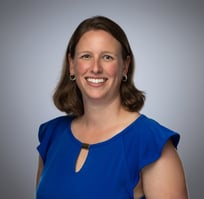
Jennifer Wagner
Director of Medicaid Eligibility & Enrollment
Jennifer Wagner is the Director of Medicaid Eligibility & Enrollment with the Center on Budget and Policy Priorities. She focuses on how policy, operations, and technology can improve the enrollment experience for clients and staff and ensure more eligible individuals access needed supports, particularly in Medicaid and SNAP. Previously, she was an Associate Director with the Illinois Department of Human Services where she was responsible for SNAP and TANF policy and oversaw local office operations statewide that determined eligibility for SNAP, TANF, and Medicaid. Jennifer helped lead the modernization of policy, business processes, and technology in connection with Affordable Care Act implementation in Illinois. She was a Skadden Fellow at the Sargent Shriver National Center on Poverty Law, is a 2008 graduate of Northwestern University School of Law, and holds a B.S. from the University of Wisconsin – Madison.

Let's talk!
Connect with a revenue cycle expert to discover a custom plan to amplify your revenue cycle with our transformative technology and services.