
GetixHealth Podcast
Why Your Highest- ROI Denial Fix Might Be Standing in the OR
 Alex Oey · July 23, 2026
Transcript — follow along with the video
- Shawn Gretz(0:09) Welcome to the RCM Reframed GetixHealth podcast, where we talk to revenue cycle leaders across the country. (0:18) Today, I have the great pleasure of having Sergio Quiej with us today. (0:22) He is the patient financial services support manager of adventus health.(0:27) He is also aka the revenue cycle guy, if you look him up on LinkedIn. (0:32) And then also, he is the HFMA's vice president of the Lone Star chapter. (0:38) So, welcome, Sergio.(0:39) We appreciate you taking the time to join us today at getix
- Sergio Quiej(0:43) Well, thank you. (0:44) It's a pleasure to be here, Sean and team.
- Shawn Gretz(0:48) Yeah, one of the things we're going to talk about today, and I think this is an important piece. (0:52) Normally, we have conversations about AI technology. (0:55) We have conversations about patient financial experience.(0:57) We have conversations about leadership. (0:59) But today's topic is going to be about the community. (1:02) And I think that's an important topic because Sergio really embraces this.(1:06) So, Sergio, tell me a little bit first about how you got into health care revenue cycle together.
- Sergio Quiej(1:13) Oh, man, I think the passion for revenue cycle, it was something that sought me out. (1:22) It wasn't something that I looked for. (1:25) And in 2008, I had to transition from a career, and that was due to the economic bubble, the finance bubble that happened.(1:35) And health care was one of those things that I have very little understanding of. (1:40) And through working and trying to understand how insurance follow up specifically on just the government side of things. (1:52) And I finally had it one day, and that kind of spark just blew up.(1:59) And from there, it was just more, okay, let's see if we can gain more knowledge about this. (2:07) And that's how my career expanded into other areas.
- Shawn Gretz(2:13) You're right. (2:14) All of us have our starting point in revenue cycle. (2:16) It's not something that we typically start, like, desire to go into high school.(2:20) You didn't say, I'm going to be in revenue cycle later in my life. (2:23) You had a moment of light that put you into this new brand new career. (2:27) It's interesting because a lot of individuals I talked to also started on the front lines.(2:32) That front line experience is such an important piece because you, as we talked about before, the community, you really connected to the community. (2:41) So can you tell me a little bit more about how community came such an important role in what you do today in health care?
- Sergio Quiej(2:50) Absolutely. (2:51) You know, after years of working in different areas of the revenue cycle, there was one specific moment that really triggered that community part of it. (3:05) And that was working on a stop loss plane that I have raised my hand and said, let me work this before it's legal.(3:14) And it was a $250,000 stop loss plane that at that moment, I triggered the end outcome. (3:23) And that was the patient, that community, where I said, I understood a lot more of how intricate managed care, the contracting and what patient responsibility is. (3:36) And in my head, it just resounded, how much of this is the patient going to owe(3:43) I really don't know. (3:45) And that triggered a different in-depth discovery and understanding of what was going on and ultimately came to a resolution of things. (3:55) And that moment was the pivotal moment for me in revenue cycle to, OK, there's something here.(4:04) There's something here that I really liked. (4:06) And over months of working this case, it really became apparent that revenue cycle was for me and that I was going to continue doing it. (4:19) But it all started thinking about the end result and the end recipient of that result.(4:26) It wasn't the hospital. (4:28) It wasn't the payer. (4:30) Ultimately, it was the patient(4:32) And that's community. (4:33) And that's where community, that's where I really embrace the community aspect of reverse engineering from that point.
- Shawn Gretz(4:43) So one claim, one patient, one experience that you thought to yourself, you know what? (4:48) That's a stakeholder in our community. (4:50) The capability for us as patient financial experience individuals that work in the support manager role, whatever role it may be, it really drove that to have a better understanding of what community means to you.(5:03) And really, it feels like you take it from a lens of a patient. (5:07) Is that is that a fair statement? (5:09) Many times are.(5:10) Oh, oh, yeah, absolutely.
- Sergio Quiej(5:12) We have to start with the lens of who we can impact and how we can impact, whether for good or for bad. (5:21) And often we have to look at, I want to do the best impact to the community, because ultimately, whatever we do and on the provider side, we're we have to be the stewards of the resources that we have. (5:38) And we often have to fight challenges and we often have to jump hurdles to get that.(5:45) But when we do it with the starting point being who is the people that are going to be the ultimate, who's a stakeholder that would have to report that out? (5:57) And I think, you know, reporting that out, I actually had an experience where I have to say that, look, I don't report up to anybody in here. (6:08) I start reporting out to my community.(6:11) When I start reporting out to my community, I embrace that that accountability, that everything that we have to do, we have to do it to the utmost respect for it with the utmost. (6:27) Adversity so that we can end up in the best outcome possible where the patient is the one that's going to have the best.
- Shawn Gretz(6:38) And in the end, so in the long run, when you think about this, there's a there's a quote that I heard you say once before, and that the community is our customer. (6:49) How how did that quote come to you? (6:50) How did you think about that being always your customer, not just and it's not just one patient, but also a broadening the scope of saying, look, it's it's every patient in that community.
- Sergio Quiej(7:02) Yeah, it's you know, I was I was exploring and helping the team with authorizations and authorization denials. (7:12) And and for me, it wasn't just about looking at the at the metrics. (7:16) And that's one of the that's one of the things that I coined from that period that I was able to to work where I was looking for metrics.(7:27) But then I coined this phrase that I have on my profile and that I live by. (7:35) And it's almost a daily motto motto. (7:37) It's we have to look beyond the metrics.(7:40) We have to look beyond the metrics. (7:42) And for us, it was looking at a certain bulk of denials that were happening. (7:49) And I said, OK, so with community in mind, what needs to be done in this scenario?(7:57) And that led me to to ask for for time in the surgery room. (8:06) And that was a little bit of a hurdle trying to get that time. (8:08) But I had support for my leader.(8:10) And I think when when you are able to convey the message and the mission to the people around you, that this is not about me, it's not about you, it's about our community. (8:23) Suddenly there is buy in from someone. (8:26) Someone had my back that said, hey, this needs to be done.(8:30) It needs to happen. (8:32) He needs to go and explore that area. (8:34) And when I did that, I that there were possibilities within the department, which is also our community.(8:47) The people around us makes it our community. (8:49) How can we help them? (8:51) And in that project, ultimately ended up creating a one and a half FT within six months.(8:59) And it was able to we were able to alleviate in the surgery department a transition person that was freeing someone from one route to the other where didn't have to run around. (9:14) But it came it came from from looking at beyond the metric. (9:19) I'm not going to go and look in reducing the write off.(9:23) I need to look at what impact I can do internally because that's community, but also the impact of our community. (9:32) And those are dollars that we were able to adjust and keep in our in our in our facility to provide more services for our community. (9:46) So every dollar that we write off, it's every opportunity that we can not serve our community.(9:54) So when we think of it in those terms, oh, yeah, I'm not looking at it that we're beyond two percent of write offs. (10:01) It's not about that metric. (10:02) It's why is it that we're not doing next year, the next five years to develop something for our community?(10:10) We can have the next service line. (10:12) We can have the next financial aid for patients that are coming through the doors. (10:17) We can have a lot things added here.(10:20) We can have more resources within our departments. (10:24) So our our departments are running the lean, but also efficient and also not sweating. (10:32) Right.(10:32) Because I have to go from one place to the other. (10:35) But let's look for those experiences and those opportunities that we can also help internally by helping our community. (10:43) And it's interesting how that works, because when we think about others, suddenly we end up helping ourselves.
- Shawn Gretz(10:51) There's two things I heard from that that I want to touch on because I think they're important. (10:55) Number one is, you know, in a sense, you took a look at this and say, OK, what is the root cause causing the issue of this problem? (11:02) That's one thing that I want to take away and have a conversation about because I think it's important.(11:05) The second part is what you did is you put yourself in the situation where you're saying, look, it's the clinical side, the surgical side that I need to be at. (11:14) So I need introductions there to be able to get through. (11:17) So let's talk about the root cause.(11:18) How did you how did you realize that it being putting in person in the surgery room is the place where you needed to go to solve for whatever it may be for that community private authorization? (11:30) What what brought you there?
- Sergio Quiej(11:33) It's it was through through analytics, it was looking through, OK, it's not just a payment, it's not just another list of the budget that we need to resolve. (11:44) But why is it causing it? (11:46) Why is it coming from there?(11:48) Let's go to the actual charge in that claim that that was denied. (11:52) OK, is it an implant? (11:54) Is it is it a a supply?(11:58) What is it in trying to understand every single part that was involved in a sample of claims is what brought me to. (12:07) OK, it seems like this is considered a bundle authorization denial, but in a way. (12:17) It's something that we can control, but how did it get out of control(12:23) And in understanding that part, it's what led me to the to to the surgical part, because for me, it was it was exploring why is it denied from why is the payer denying it? (12:35) And it was more it was a sizing thing. (12:38)It wasn't about a that we it wasn't utilization, but rather measures as far as size.(12:47) And so that was OK. (12:48) That's interesting. (12:49) So what did we authorize?(12:51) Oh, we authorized for this specific square centimeters. (12:57) OK, what did we use? (12:58) We use this.(12:59) OK, why did we use this instead of this? (13:01) And so in my conversation with the group was, folks, I'm just here to observe. (13:08) I'm going to observe and maybe pray some notes.(13:11) That's it. (13:11) It's not an audit at all. (13:13) Believe me.(13:14) And I had to make sure that that came across, that it wasn't being punitive. (13:21) You know, so understanding that the mission that I was after, it's critical for those individuals wanting to receive your help because they become hesitant. (13:32) I might was the person doing here.(13:34) And the question started asking, OK, and I've started observing and I think there's so much value in observing if I'm saying a word, you wouldn't learn so much from observing. (13:48) And I started observing how they navigated this particular case. (13:53) And I said, this is very similar to what I saw in the data.(14:00) And so I asked the question, hey, I'm curious, what is it that triggers you to select one than the other? (14:09) Because it's, you know, especially when we have systems like CERN, you have preferred cards for patients, for surgeons and things like that. (14:19) And I said, well, what triggered you to select something different from the preferred card that's already there?(14:25) Well, we don't have much time, so they're under time constraint. (14:30) And when we go, it's just grab and go. (14:34) And I said, perfect.(14:36) This is it. (14:37) And it led us trying to understand not only what I was after, but what they're going through. (14:45) For them, it was saving minutes.(14:48) Or steps even, because they don't have much room to turn around. (14:53) And I said, OK, what's the opportunity here? (14:56) We're looking at turnaround time and searching for a supply, which in a way is not a supply.(15:03) It's considered an implant. (15:05) And that was it. (15:06) And I said, that is very interesting.(15:09) So I had the conversation with the leader and I said, these are my observations. (15:14) They're selecting something because they're time constrained. (15:17) It's not whether they understand that it's going to be a two by four or four by four makes a difference.(15:24) It's just that proximity, the proximity of the supply.
- Shawn Gretz(15:30) And I said, it ends here. (15:33) Yeah, I bought them to select something that I honestly was detrimental to the community or to the patient COVID cards because the prior authorization was going to deny based upon that. (15:44) So there's a fantastic thing.(15:46) It's go to Gimbal. (15:48) I don't know if you've ever heard that before, the saying of go to Gimbal. (15:50) It's a it's a quality management philosophy where you you go to the location of where it's being happening, where it's happening, to learn about it and to go to the clinical side.(16:01) You had to, in a sense, not only get the community from your leaders, you also had to get a community by the clinicians as well, because I'm sure that that wasn't an easy conversation for them either to have someone. (16:13) And like you said before, they thought, you know, is this auditing? (16:17) Is this what?(16:18) Why is this gentleman coming in to my right? (16:21) I mean, yeah, that's that's a hard thing to have. (16:25) But it's interesting that tell me more about what did you do to put the clinicians at ease that you were there to be able to help them?
- Sergio Quiej(16:35) It was, you know, for me, it was spending a full week in the in the surgery in different in different scenarios could be ortho. (16:43) It could be general surgery. (16:45) It wasn't just one specific thing(16:47) I knew that I knew the service line that was going to be, but I wanted to be with the team. (16:53) I wanted to learn about them. (16:55) I wanted to learn how they navigated in certain in certain service lines or in service types of surgeries that when it came the time to the one that I was looking for, it wasn't only spooking around.(17:08) They have already had a sense of me being there where I wasn't doing anything, just observing. (17:14) So when it came to that observation, you know, it wasn't it wasn't received as an oh, it was already. (17:22) Oh, yeah.(17:23) He's been here two or three days already and it did nothing happen. (17:27) He's just been observing. (17:29) So that's a great observation.(17:30) He saw something and and just just having candid conversations about what do you what do you love most about this place? (17:40) What would make it better? (17:41) And in another thing that I adopted during that period was asking them.(17:48) And it was during it was in the season about July about around this time, not and I said it if you if you had a blitz for Christmas in July, why would you want what would you want for Christmas? (18:02) And I asked them to the leaders, the team members, and the interesting part about it is that throughout that period that we that I was there, it was unanimous. (18:14) It was we need extra help.(18:17) And I said, fantastic, I think I can help you. (18:22) But if you let me help you help me and then we can figure this out. (18:28) And that's how that one and a half FTE idea came about.(18:33) And I said, OK, what would you do with the one FTE? (18:37) Because that was the wish of the leader, as well as the individuals in the room. (18:41) We would actually if we had one extra person helping, it would allow us to go get a drink, to go get a snack.(18:49) And I'm like, wow, those are minimal things in quotes, minimal, not important things that we often don't look. (18:59) And that's going beyond the metrics because that's something that we don't measure. (19:04) But it's there that it's valuable to the people who are actually creating the measure and it often goes overlooked.(19:12) So I went to work with that and I said, OK, what would it take? (19:16) It would take this much. (19:18) This will be the budget for that person.(19:21) And I said, OK, let me explain to you a little bit about what I'm seeing. (19:26) And let's get to work with. (19:29) What we can do and the amount of denials that were coming from that front end.(19:36) It was it was a significant number of dollars that we were ultimately going to write off. (19:44) And I said, if what if we tweak one thing specific to this item here, that velocity and supply needs to happen, but we don't have time and we often get it wrong. (20:02) What if we add a layer where you don't have to say anything, but all that person needs to do, and that was the circulating nurse, what if that person just sends me the number and I create a process where a person on the other side is going to receive it and they're the ones that are going to go and root cause everything, be on the lookout and start planning the entrance.(20:28) By the time you're done with the procedure, not after or after the coding, it's already missed, but live, let's make it happen live. (20:39) And we reduced it within three months. (20:41) We were able to get to half the point.(20:44) And then by six months down the line, that leader was able to turn in a request about I really need a one and a half ATE. (20:56) But when we start asking questions as well as the person that's going to approve that initially is going to be what we don't have the budget for. (21:05) OK, reverse engineer that answer.(21:09) That's going to be a no. (21:10) What if you say. (21:13) I know we don't have we already budgeted, but these are things that are happening in our department that we already implemented, we have processes in place that are going to reduce the amount by the end of the year that's happening.(21:28) Therefore, that net revenue is going to trickle down to our department eventually and they can do the math. (21:35) You can send it through the finance team and see what that is. (21:38) But we are working on reducing this.(21:42) That person approving that request has a different insight, has a different perspective and has a different. (21:51) Type of response. (21:54) OK, I know you acknowledge that there's a problem.(21:58) You acknowledge that there's a solution and you're letting me know that is going to be fulfilled. (22:06) Yes, you have it. (22:08) And that person had it by by the end of the year that had already a floater person going through there.(22:15) And I would come by. (22:16) It was like, hey, I got to make sure you get lunch with the excuse. (22:20) Right.(22:20) And like, oh, yeah, I forgot to take lunches. (22:22) Well, you got to make lunch. (22:23) I'm a number that time now.(22:25) Oh, yeah, that's right. (22:26) Well, you don't make it happen. (22:28) And so it was one of those things that I became friends with, with that, with that community.(22:34) And a lot of that had to be it was through observing. (22:38) Observing a lot and breaking silos, because here we had we have a department that is very good about what is the rep cycle, right?
- Shawn Gretz(22:49) There's a silo that's there, that there that pushes through that you have to you have to do. (22:53) Tell me, tell me this. (22:54) I want to ask a question in regards to that, Sergio.(22:57) How you today make sure that others in your purview are doing the same thing you did? (23:02) Right. (23:02) Because that that worked well.(23:03) You went to the root cause. (23:04) You went to the gimbal. (23:06) Is there is there ways that you help coach others to go to gimbal or go to the old root cause analysis of this?
- Sergio Quiej(23:14) Absolutely. (23:14) Absolutely. (23:15) It has to be knowledge transfer, knowledge transfer.(23:20) It's one of those things that that I'm very passionate about where I'm like, hey, what? (23:26) I came with this solution. (23:27) I'm not going to be quiet about it.(23:28) I'm going to be I found this solution. (23:30) Like, I got to tell you about the solution that we found. (23:32) And it's great.(23:33) And speaking about that. (23:35) A colleague from for one of our four divisions, she saw that there was, hey, you guys are talking about this authorization denial, sometimes the same issue. (23:46) And we need to jump on a call.(23:48) And I'm like, I would have said, no, that solution is mine. (23:51) Mine alone can't do anything about it. (23:53) And I said, no.(23:56) When can we talk about it? (23:58) And I started exploring, I share the format of how I have developed this, what we came about. (24:04) And it wasn't the time for them.(24:07) And and hopefully it's the time for them. (24:10) And in speaking of this, I'm interacting with them next week where they are ready to implement it. (24:18) And I said, wow, that gave me just goosebumps right now, you know, because often we we are the seed planters and often we are the harvesters.(24:27) But we have to do what we have to do at the moment where we are. (24:32) And that's presence. (24:33) We have to be present with what we do, what we can interact, what the influence is and whether it happens now or later.(24:43) Let that happen, let that organically don't force anything, because when you force it, someone is going to not like it. (24:54) And suddenly there's a break in the knowledge transfer where I'm not going to I didn't buy into that. (25:00) I'm not transferring that(25:02) I don't learn that and get forgotten about it. (25:05) And suddenly you get back into the hole where that led you nowhere. (25:11) And to your question, how how am I doing that today so that we continue breaking silos?(25:19) And that's spending time with my with my team, ensuring that I need to make sure that they get leveled up. (25:29) They need to understand revenue cycle more. (25:32) What is it that this means?(25:34) Whether that's through HFMA engagements or certification and my team, it's it's 100 percent HFMA certified with two or more certifications. (25:46) And and I take pride in that because that means that we're transferring that knowledge that we have to them. (25:52) And in my ask to them is always, always book in your calendar an hour of learning, an (26:00) hour of interaction, whether that's shadowing a manager, understanding what is that (26:06) they do for your knowledge, but also once you understand what they do, how can you (26:13) implement in or how can you help them improve by taking an hour out of time, an hour (26:19) of a week, a time that you might feel that it is not relevant, could pay off great (26:26) dividends down the road. (26:28) And helping someone reduce an hour one week is not just one hour.(26:32) It's 52 hours a year that you might be able to save them, if not more. (26:38) So always encourage that. (26:42) When was the last time you learned something new?(26:45) When was the last time you shared this with with your team member? (26:49) When did you run into a great prompt and co-pilot that you can share with your team members? (26:56) And we're creating albums of this prompt really worked well for me.(27:01) OK, share it with the group and let's see if we can connect with somebody else. (27:06) Somebody else might have or can have the same game, if not more, by just that application. (27:13) So continuous encouragement, continuous presence(27:18) I believe in the in the investment of knowledge transfer to team members. (27:24) They are the greatest community that we have and often gets overlooked.
- Shawn Gretz(27:30) You know, you brought up a topic that I'm passionate about just as well, it sounds like you are as well, the HFMA engagement that you have, not only for your personal, but also for your team as well. (27:43) Tell me, tell any one of our listeners why they should be either volunteering for HFMA, because I myself have been the president of the Wisconsin chapter, was the regional executive for Region 7 and also the National Advisory Committee for RevCycle for years. (27:57) And I think it's an important piece to my growth, but also I constantly share.(28:02) So tell me in your words, why why would you recommend to someone to go to HFMA and volunteer?
- Sergio Quiej(28:08) You know, in RevCycle, I got engaged and I stayed in the shadows for six or seven years, but I follow people in HFMA until one day I said, I need to volunteer and I need to get involved. (28:26) And the amount of knowledge that you will gain through interacting with people in HFMA is it's invaluable. (28:39) That's one.(28:40) The second one is going to be polish and sharpen the saw. (28:46) You're going to hear things that you never heard before about the career path that you have and say, that's a different perspective. (28:56) I've never heard of it.(28:58) I'm interested now. (29:00) And also the opportunity to help not only health care providers or partnerships, but also helping communities get better by bringing thoughts, mind solutions and walking hand by hand towards one goal. (29:22) And that goal, it's community.(29:25) And in HFMA, it's huge about community because we care about the people that are involved. (29:31) We care about the progress that you're making. (29:35) We care about how you are growing in your revenue cycle.(29:41) Are you stagnant? (29:42) Let us help you. (29:43) Let me help you with that.(29:45) Do you care for mentorship? (29:47) Just for the mentorship part alone, it's tremendous. (29:51) The value that you will gain by being involved as a mentor or a mentee, it opens the doors wide open.(30:03) And there's a lot of knowledge for anyone that has not been involved. (30:09) If any of our listeners are considering or on the line of should I help? (30:15) It's going to take one or two hours of my time to do this.(30:19) Don't be afraid. (30:21) Jump right in. (30:23) You might say, I don't have any knowledge.(30:26) Perfect. (30:27) That's the best candidate because you have a fresh mind. (30:31) You have a new perspective.(30:33) You have a new idea. (30:35) And those are the individuals that we want at HFMA, those that know that they don't know it all. (30:43) And that's great because there's great opportunity for growth.(30:47) And if you know a lot and you want to get involved because maybe you're shy, don't. (30:54) Get involved. (30:55) Get involved with helping with just a small task.
- Shawn Gretz(31:01) Negi, off of you. (31:03) Join a group. (31:06) Join whatever there is that you can do.(31:09) Look, your voice matters. (31:10) I think that's the part that serves you more than anything. (31:12) Your voice matters and it helps drive the organization.(31:15) Some of your best friends probably will come from HFMA afterwards and you'll have a peer group that you can lean on for the rest of your life, which is part that I love about HFMA more than anything. (31:26) The number of connections such as yourself and others that I've met throughout the years, I said, look, these are amazing people doing amazing things that they're not only at their organization, but also going back to the point of this podcast, the community that you create just from your local chapter. (31:42) And then from the regional and then you get to the national.(31:47) And it's an amazing piece that's important, I think, to all of us to have a sounding board and or conversations with people. (31:56) And in so many instances, it has saved me hundreds of hours by just picking up the phone and reaching out to someone and saying, hey, how are you solving for this? (32:07) Because everyone in HFMA feels that community.(32:10) They'll pick up the phone. (32:10) They'll take that phone call and have a conversation with you.
- Sergio Quiej(32:14) Absolutely. (32:15) Absolutely. (32:16) I agree 100% to that.(32:18) And that's happened to me before, you know, where I'm like, hey, do you have 15 minutes? (32:23) I need to learn something about you. (32:25) Yeah, absolutely.(32:26) Or vice versa. (32:28) Make yourself available. (32:30) But I don't know all the answers, but I surely know someone that might have an answer.(32:35) And yeah, so when you become available, you're going to receive a lot more also.
- Shawn Gretz(32:44) Well, Sergio, this has been a great conversation. (32:48) I truly appreciate the time that we've spent together. (32:51) I want to, one, thank you for taking the time to spend with RCM Reframed from GetixHealth podcast.(32:56) But also, two, thank you for telling us more about the community. (33:00) Thank you for telling us more about HFMA in general, what your volunteer experience. (33:04) Thank you for taking us through the cause and going to GEMBA as well.(33:09) Really excited for others to hear your story as well. (33:13) So thank you.
- Sergio Quiej(33:14) Absolutely. (33:15) Thank you
Executive summary
In this episode of RCM Reframed, host Shawn Gretz, President, Sales and Marketing at Getixhealth chats with Sergio Quiej, Patient Financial Services Support Manager at Adventist Health and Vice President of the HFMA Lone Star chapter, about reframing denial management as a clinical partnership discipline rather than a back-office analytics function. They also discuss how knowledge transfer, HFMA involvement, and a community-as-customer mindset scale gains across teams.
Key takeaways
- Root-cause OR observation for authorization denials
- Real-time variance capture from circulating nurse to RCM
- Building the business case for clinical FTEs using preserved write-offs
Meet The Speakers
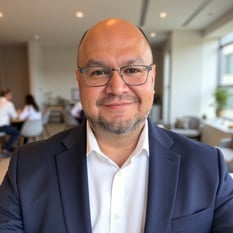
Sergio Quiej
PFS Manager at AdventHealth
Sergio Quiej serves as Multi-state Division PFS Support, providing analytical and root cause support for 26 Hospitals. He is a curious visionary leader with over 18 years of combined experience in Hospital and Orthopedic Revenue Cycle, helping Accounts Receivables with unique methodology/approach through analytics, dashboard development and metrics driven processes towards a unify goal “Create Better Communities” by reducing write-offs, denials, days in AR, and cash acceleration. He holds a Change Management Certification, Prosci, an international certification on leading change applying ADKAR Methodology, and a System Thinking Certification from Cornell University. He currently serves in Health Financial Management Association (HFMA) on the Board of Directors, and as Vice President for the Dallas/Fort Worth Chapter.His most recent speaker engagement at HFMA Texas State Conference Moderating the Revenue Cycle Panel and Lone Star Summer Conference where he shared the formula to harness your inner supper power to Level-up your Team. His motto is “Changing Revenue Cycle Beyond Metrics” by empowering individuals to adopt Survival Bias Theory, approaching challenges through a different lens.Sergion loves being part of empowering our next generation of leaders, and he welcomes intentional conversations, collaboration, program development to further your dreams interacting with Universities around DFW to help connect students and grow within HFMA
Let's talk!
Connect with a revenue cycle expert to discover a custom plan to amplify your revenue cycle with our transformative technology and services.